Monday, December 1, 2025
Platforms for Events in Argentina 2025: Complete Guide
Written by:

Asuncion Leonard
35 minutes
35 minutes
35 minutes


In this post:
In this post:
In this post:
Section
Section
Section
Event Platforms Argentina: The Best in 2025
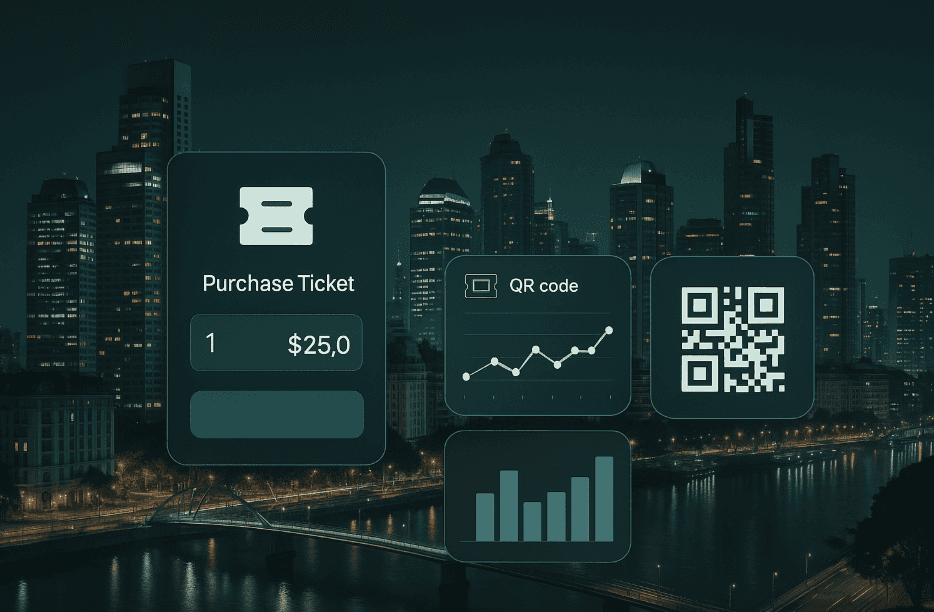
If you are evaluating event platforms in Argentina, the decision you make today is going to define much more than where you sell tickets. You will be choosing how much control you have over your brand, how quickly you can create professional experiences, and whether you will build your own asset (your database) or rent someone else's audience.
This guide analyzes the real options in the Argentine market in 2025, focusing on verifiable technical functionalities, not marketing promises. You will find objective criteria to decide which event platform best suits your type of operation, from massive events to corporate conferences.
The objective: that you choose with clear information, not advertising.
For more information about each platform or if you need personalized advice, do not hesitate to contact us or consult the following sections for more details. More information.
What "event platforms" means in Argentina today
The concept of event platforms has evolved radically in recent years. It's no longer just about "uploading an event and selling tickets." Today, managing your events means orchestrating multiple layers of technology, communication, and analysis, and the best part is that the process starts quickly, allowing you to launch your event or online community in a matter of minutes.
What professional organizers are looking for in 2025:
Brand and data control: organizers want a platform where it's possible to build their own identity without the ticketing platform's brand overshadowing their project. This includes having your own domain, customized design, and fundamentally, complete ownership of attendee data.
Omnichannel experience: from virtual to in-person events, including hybrid formats—the technology must adapt seamlessly. What works for an in-person event with 200 people must also scale for online conferences with thousands of participants. Additionally, attendees can access their personalized agenda, networking features, or interactive content directly from the event's mobile application.
Digital ecosystem integration: a modern platform connects with social networks for remarketing, allows installation of your own pixels, and facilitates analysis of buyer behavior from the moment they enter the site until they validate their ticket at the door.
Speed and stability: in the Argentine context, where competition for attention is fierce, an easy-to-use platform that allows you to create your event in minutes and supports massive traffic spikes without crashing is a minimum requirement, not a differentiator.
Real automation: features like AI remarketing, automatic abandoned cart recovery, and intelligent email marketing aren't "nice to have"—they're tools that help you convert 15% to 30% more with identical advertising investment.
Types of events these platforms manage:
Massive events: concerts, festivals, shows (thousands of attendees)
Corporate events: conferences, summits, team buildings
Cultural events: theater, live music, exhibitions
Sports events: tournaments, races, competitions
Educational events: workshops, courses, training sessions
Social events: parties, nightclubs, after-office gatherings (including the option to reserve tables or customized table configurations)
Fairs and expos: commercial, gastronomic, technological
All types of events have common needs (sales, management, access) and specific needs. The platform you choose should solve both without complicating your operation.
Event platforms: the current market landscape
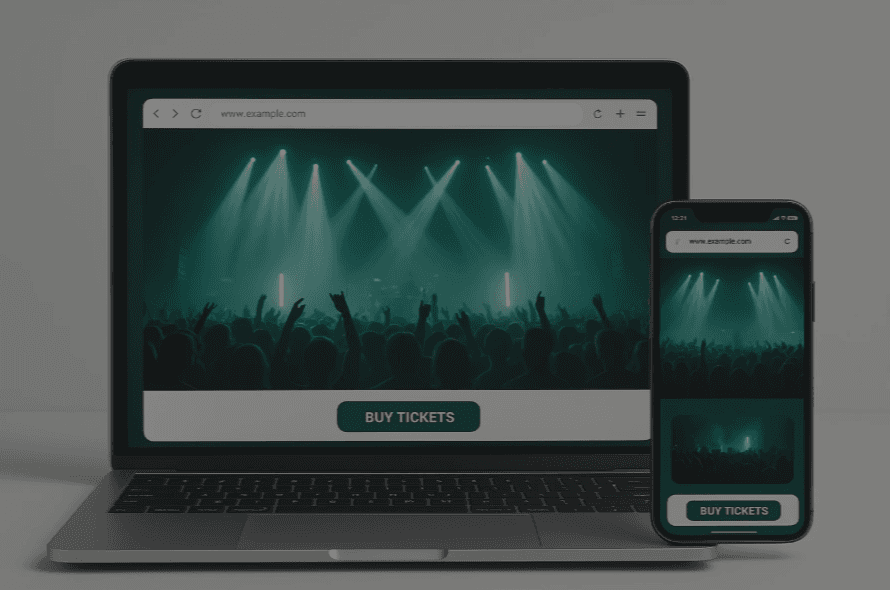
In the Argentine market, the offer of event platforms is divided into three main categories that respond to completely different philosophies about the relationship between technology and organizer.
Additionally, some platforms offer customer support by phone to assist organizers in managing their events.
Massive marketplaces: when the platform is the brand
Traditional marketplaces operate under a model where all events coexist in the same digital ecosystem. The visual identity is generic, the URL is shared (platform.com/your-event), and the focus is on maximizing the platform's total volume, not the individual success of each organizer.
Characteristics:
Platform's domain, not yours
Standardized design for all events
Shared database or with limited access
Cross-promotion of other events during purchase
Fund retention before settlement
When it can work: For occasional organizers who prioritize simplicity over control, or to test a small event without investing in their own infrastructure.
White label platforms: the organizer in front
White label event platforms invert the model: the technology is invisible, your brand is the protagonist. Each organizer has their own domain, customized design, and total control over their buyers' data.
Characteristics:
Real own domain (tickets.yourevent.com)
100% customizable design
100% organizer-owned database
Direct payment without retention
Zero visual references to the platform
When it's ideal: For professional organizers, established production companies, venues with strong identity, or anyone who values autonomy and long-term brand building.
Hybrid solutions: the middle ground
Some platforms offer intermediate options: partial customization, semi-white label, or tiered plans where premium features (like your own domain) require higher-tier plans.
Consideration: Evaluate whether the limitations of basic versions actually serve you or if you'll eventually need to migrate to the full version anyway.
How to choose an event platform in Argentina

Of the technological decisions made by a professional organizer, the event management platform is among the three most important. It defines conversion, brand, and operational autonomy. When evaluating options, it's essential to consider the availability of support in Spanish, as this is key for local organizers and improves accessibility and service quality.
The moment of decision: what to consider before contracting
The moment of choosing a platform is critical because it affects all aspects of your future operation. A bad choice can mean lost months, retained data, and diluted brand.
Critical variables when deciding:
Time horizon Are you organizing a one-time event or building a recurring operation? If it's the latter, prioritize platforms that scale seamlessly and give you total control of data to build a long-term audience.
Projected volume How many events per month/year will you manage? If the volume is high, you need reusable templates, quick setup, and automations that save time. If it's low, you can tolerate more manual processes.
Event complexity Are they single-date, single-price events, or multi-day festivals with multiple sectors and tiered pricing? The platform must support your complexity without requiring custom development.
Brand maturity If your brand is already established, ceding visual identity to a generic ticketing platform is counterproductive. If you're just starting, you can prioritize speed over customization (although white label helps from the beginning).
Technical capacity of your team Do you have a technical team that can configure complex integrations, or do you need everything to be plug-and-play? The best platforms are easy to use for basics but allow advanced customization for technical teams.
The objective evaluation framework
Before comparing names, establish criteria. Not all event platforms meet the same technical standards. The difference between an amateur tool and a professional one shows in:
1. Data ownership architecture
Are attendee data yours or "shared"? Can you export them whenever you want? Does the platform use them to promote other events? This is the most strategic variable in the long term.
2. Financial settlement model
How does the payment flow work? Does the platform retain funds or is there direct payment from the processor to your account? How long until you have liquidity? In Argentina, where financial planning is critical, this is not a detail.
3. Customization capabilities
Can you use your own domain? Is the event design customizable or are you limited to generic templates? Do confirmation emails carry your brand or the platform's?
4. Technical integrations
Does it connect with Mercado Pago without intermediaries? Can you install your social media pixels? Is there an API for custom integrations? Does it work with your CRM?
5. Performance and scalability
Does the system support thousands of concurrent users without degradation? What happens at the moment of sale opening when 5,000 people enter simultaneously?
6. Conversion tools
Does it have functional remarketing AI? Automatic cart recovery? Email marketing that actually helps sell more? Or are they just promises on the roadmap?
Questions you should ask before contracting:
Can I have my own domain (e.g., tickets.myevent.com)?
Is the buyer database 100% mine and exportable?
How long does it take for sales money to be credited to my account?
Is the checkout optimized for mobile (where 70% of purchases occur)?
Can I see metrics in real-time during the sale?
Does it have a QR validation system that works offline?
Do the marketing automations already work or are they "coming soon"?
Can I create complex configurations (multi-date events, sectors, dynamic pricing)?
If a platform doesn't answer at least 6 of these 8 questions affirmatively, it's probably not up to professional operations standards.
Technical criteria that matter in 2025
Beyond each platform's marketing, there are objective technical standards that separate basic tools from enterprise solutions. These are the criteria that high-volume organizers evaluate:
1. Real white label (not cosmetic)
Superficially, many event platforms offer "customization." But real white label means:
Complete own domain (not subdomains like platform.com/your-event)
100% customizable design (CSS, templates, layouts)
Emails with your total branding (sender, design, footer)
Checkout without visual references to the platform
Zero cross-promotion of other events during purchase
Why it matters: Every interaction is an opportunity to reinforce your brand. If the prominent identity is the ticketing platform's, you're building value for someone else.
In Fanz: Real own domain, fully customizable design, purchase experience that looks developed by the organizer.
2. Direct payment without intermediation
The traditional model retains funds: buyer pays → platform collects → retains for days/weeks → settles when it decides.
The modern model is direct payment: buyer pays → Mercado Pago processes → credits to your account in normal commercial processor timeframes.
The difference: liquidity, transparency, autonomy.
In Fanz: Direct integration with Mercado Pago. Funds go from the processor to your account, only with MP's commercial timeframes (7-10 days). The platform doesn't act as a financial intermediary.
3. Real-time metrics (not delayed reports)
Managing your events with 24-hour-old data is managing blindly. A professional platform shows in real-time:
Sales per hour/day
Checkout conversion
Traffic source channels
Best-selling ticket types
Attendance projection
Automatic alerts (e.g., "10% of tickets remaining")
Why it matters: With real-time visibility, you can adjust campaigns while they're running. Technical problems are detected immediately. Momentum moments are capitalized.
In Fanz: Dashboard updated every few seconds with all critical metrics. Enables informed decisions in the moment.
4. Functional AI and automation (not vaporware)
Many ticketing platforms promise "artificial intelligence coming soon." In 2025, what matters is what works today.
Real AI functionalities:
Automatic cart recovery: Detects abandonments, sends personalized sequences, recovers 10-20% of lost sales
Intelligent email marketing: Segments audiences, optimizes send times, personalizes content
Recommendations: Suggests similar events to buyers based on behavior
In Fanz: These three functions are already active. It's not roadmap. They work automatically without manual configuration.
5. Professional access system
Validation at the door is the moment of truth. A robust access system must:
Generate unique QR per ticket
Work offline (in case venue WiFi fails)
Show buyer info when scanning
Prevent duplicates
Allow resending lost tickets
Provide real attendance reports in real-time
In Fanz: Validation app that covers all these points, with entry dashboard updated live during the event.
6. Capacity for complex events
Not all events are "one date, one price, done." A scalable platform must support:
Multiple dates and times (recurrences)
Differentiated sectors (orchestra, field, VIP, backstage)
Seat numbering with visual selection
Tiered pricing (early bird, regular, last minute)
Discount codes with complex rules
Combos and packages (e.g., 3-day pass includes X, Y, Z)
Hybrid events (in-person and virtual simultaneously)
Configuring this shouldn't require custom development or endless support tickets.
7. Mobile application: beyond responsive design
More than 70% of ticket purchases occur from smartphones. But there's a difference between "responsive" and true mobile application.
Three levels of mobile experience:
Level 1: Responsive site Adapts to small screens but is essentially the miniaturized desktop web. It works, but it's not optimal.
Level 2: PWA (Progressive Web App) Optimized web experience that can be installed on the device as if it were a native app. Loads faster, works partially offline.
Level 3: Native mobile application True apps (iOS/Android) with specific functionalities: ticket wallet accessible without connection, push notifications, integration with operating system wallet.
Minimum standards for 2025:
Perfect responsive design (no zoom, no horizontal scroll)
Loads in <2 seconds on 4G
Forms with intelligent autocomplete
Large, tactile, easy-to-use buttons
Checkout specifically optimized for mobile (not reduced desktop version)
In Fanz: Mobile-first checkout designed specifically for conversion on smartphones, where most purchases occur.
8. Integration with digital ecosystem
The event platform doesn't live in isolation. It must connect with:
Social networks: Facebook Pixel, Instagram, TikTok Pixel
Analytics: Google Analytics, Google Tag Manager
Email marketing: Mailchimp, SendGrid
CRM: HubSpot, Salesforce (via API)
Ads: Meta Ads, Google Ads (conversions)
Where there are no native integrations, there must be an open API for custom developments.
Event management: from configuration to post-event analysis
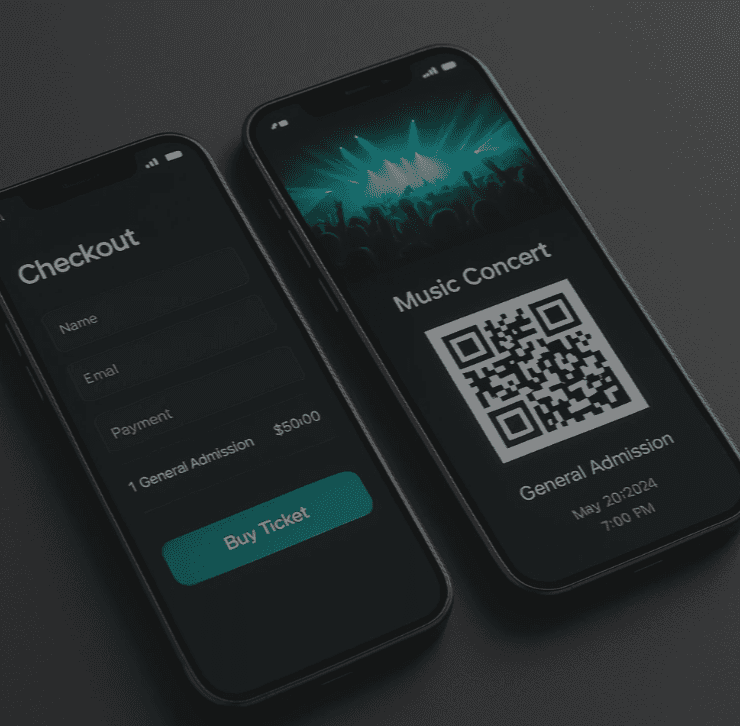
Professional event management encompasses much more than simply "selling tickets." It's a complete cycle that includes configuration, promotion, sales, validation, and analysis, managing all stages from start to finish.
The complete event management cycle
Phase 1: Configuration (pre-launch)
When creating your event, you need to:
Configure name, date, location, description
Upload optimized cover image
Define ticket types and prices
Establish capacities per sector
Create discount codes if applicable
Customize visual design
Configure own domain
Install tracking pixels
Ideal time: 10-15 minutes for simple events, 30-60 minutes for complex ones.
Phase 2: Launch and promotion
The launch moment defines initial momentum. A modern platform should facilitate:
Sharing on social networks with optimized preview
Sending communication to existing database
Tracking source channels
Landing page optimized for conversion
Remarketing to visitors who didn't purchase
Phase 3: Active sales
During the sales period, the platform must provide:
Real-time sales metrics
Alerts when milestones are reached (50% sold, 90% sold)
Automatic abandoned cart recovery
Email marketing with reminders
Ability to adjust prices or capacities on the fly
Phase 4: Pre-event
In the days before the event:
Automatic reminder sending
Attendance confirmation
Logistical information (how to get there, what to bring)
Ticket resending for those who lost them
Phase 5: During the event
The moment of truth:
Quick QR validation
Real-time attendance monitoring
Door problem resolution
Capacity control by sectors
Phase 6: Post-event
After the event:
Automatic satisfaction surveys
Thanks to attendees
Analysis of actual attendance vs. sold
Generation of detailed reports for results analysis and decision-making
Data export for future campaigns
Promotion of upcoming events
A complete platform must support all these phases without requiring external tools for each stage.
Large-scale events vs. niche events: different needs

Events of different scales and niches have distinct technical requirements. There is no platform that is optimal for everything; there is the optimal platform for your type of operation.
High-volume events (1000+ attendees)
Characteristics:
High concurrent traffic at launch
Multiple sectors and prices
Need for technical scalability
Strong brand that cannot be diluted
Critical capacity control due to regulations
Technical requirements:
Cloud infrastructure that scales automatically
Queue system to manage concurrency
Total white label (your event is too big to "be on a ticketing platform")
Fast multi-point validation (avoid access queues)
Real-time reports for operational decisions
Why Fanz works: Architecture proven in massive launches, own domain to reinforce identity, multi-device offline QR.
Niche events (culture, theater, workshops)
Characteristics:
Specific and loyal audience
Lower but recurring volume
Long-term community building
Need for data for nurturing
Tight budgets
Technical requirements:
Own database to build community
Automatic email marketing to maintain contact
Accessible costs (reasonable commissions)
Easy to use without large technical team
Templates for recurring events
Why Fanz works: 100% organizer-owned database, email marketing AI, quick configuration for recurrences.
Corporate and B2B events
Characteristics:
Strict corporate branding
Registration with detailed information
Sometimes without public sale
Need for reports for stakeholders
Invoicing to companies
Technical requirements:
Total white label (perception of internal development)
Custom fields in checkout to capture specific data
Access codes with granular rules
Complete export for analysis
Integrations with corporate CRM
Why Fanz works: Own domain, total customization, custom fields, unlimited export.
Real comparison by event type

There is no universal “best platform.” There’s the best platform for your type of operation. Let’s analyze real scenarios.
Platforms for large-scale events
Mass events (concerts, festivals, shows) have particular demands:
Technical challenges:
Extreme traffic spikes (on-sale openings with thousands concurrent)
Need for multiple sections and price points
Strict capacity control due to regulations
Fast validation at the door (avoid queues)
Strong branding (the audience associates the event with a producer/brand)
What you need:
Architecture that won’t crash (scalable cloud infrastructure)
Full white label (your event is your brand, not “hosted on a ticketing site”)
Multi-point access system (several gates validating simultaneously)
Real-time reporting (see which sections fill up, adjust capacities)
Social integrations for large-scale remarketing
Why Fanz works well here:
Own domain reinforces the event’s identity
Proven stability during high-traffic launches
Real-time dashboard for quick decisions
QR validation offline and across multiple devices
100% organizer-owned database for future editions
Platforms for parties and nightclubs
Nightlife entertainment events have different dynamics:
Segment characteristics:
High volume, lower-ticket values
Impulse, last-minute purchases
Young audience (extremely mobile-first)
Multiple events per week/month
Need for speed in configuration
What you need:
✅ Ultra-fast checkout (3 clicks to complete purchase)
✅ Easy to use—create events in minutes
✅ Perfect mobile optimization
✅ Fast door validation (don’t create queues that ruin the experience)
✅ Automatic remarketing (recover visitors who didn’t buy)
Why Fanz works well here:
Event setup in minutes (literally)
Optimized checkout that converts on mobile
Automatic remarketing AI to recover carts
Instant QR validation
Ability to reuse templates for recurring events
Platforms for conferences and online events
Educational and professional events—both in-person and online—prioritize participation data and networking:
Specific online-event challenges:
Registration with detailed info (company, title, interests)
Multiple parallel sessions/workshops
Hybrid content (online and in-person)
Need for post-event analysis (engagement, session-by-session attendance)
Integration with streaming platforms
Sending unique, secure access links
What you need for online events:
✅ Custom fields in registration (collect specific data)
✅ Management of complex agendas (multiple tracks, schedules)
✅ Capability for virtual or hybrid events
✅ Full export of participant data
✅ Integrations with Zoom, Teams, etc. (if virtual)
✅ Automated sending of access links
Why Fanz works well here:
Custom fields in checkout to capture required registration data
Management of events with multiple sessions
Supports hybrid events (in-person + online)
100% exportable data for later analysis
Own database for post-conference nurturing
Automated pre- and post-event communications
Platforms for corporate events
Company events (team buildings, dinners, launches) require tighter visual and operational control:
Particularities:
Strict corporate branding
Named invitations (non-transferable)
Sometimes no public sales (code-only)
Invoicing in the company’s name
Premium experience expected
What you need:
✅ Full white label (looks like it was built internally)
✅ Granular access control (guest lists, unique codes)
✅ Customizable design aligned to corporate identity
✅ Registration with validation (only certain emails can register)
✅ Detailed reports for internal stakeholders
Why Fanz works well here:
Own domain creates perception of internal development
100% customizable design to the corporate palette
Access codes with specific rules
Data export for internal reporting
Platforms for fairs and expos
Trade fairs combine logistical complexity with volume:
Operational challenges:
Multiple ticket types (exhibitor, visitor, press, VIP)
Several days, sometimes weeks
Need for zone-based access control
High-volume simultaneous validations
Mix of in-person content and conferences
What you need:
✅ Complex management of ticket types and permissions
✅ Robust access system with multiple validation points
✅ Real-time footfall reports by zone
✅ Ability to manage an agenda of activities
✅ Integration with add-on products (parking, lockers, catering)
Why Fanz works well here:
Flexible configuration of ticket types with complex rules
QR system that scales to multiple concurrent validators
Real-time panel for operational control during the event
Ability to add complementary products at checkout
Functional analysis of each platform (2025)
In Argentina’s event-platform market, there are various options with different approaches. This analysis focuses on verifiable features, not sales promises.
Fanz — Argentina’s leading white-label platform
Fanz positions itself as the platform for organizers who prioritize control, professionalism, and autonomy. Unlike mass marketplaces, Fanz builds invisible technology: the protagonist is your event, not the tool.
Core features (verified, active in 2025):
White label and own domain
Each organizer gets their own domain (e.g., tickets.yourevent.com)
Fully customizable design (colors, logos, structure)
Confirmation and reminder emails carry your full branding
Zero visual references to Fanz during the buyer’s experience
Automatic SSL certificate for security
Why it matters: You build your brand with every purchase. The identity is yours, not borrowed.
Direct payment with Mercado Pago
Native integration without intermediaries
Funds go directly from the processor to your account
The platform does not hold money
Settlement on Mercado Pago’s commercial timelines (7–10 days)
Full transparency on deductions
Why it matters: Liquidity, financial control, autonomy. You don’t depend on someone “paying you out.”
Working remarketing AI
Automatic cart recovery: detects abandons, sends personalized sequences
AI email marketing: segments audiences, optimizes send times, personalizes messages
Smart recommendations: suggests similar events based on behavior
Why it matters: You can lift conversion 15–30% without raising ad spend. AI works 24/7 recovering sales you’d otherwise lose.
Real-time management panel
Dashboard refreshed every few seconds
Sales by hour, day, week
Best-selling ticket types
Source channels (Facebook, Instagram, Google, direct)
Attendance projection
Configurable automatic alerts
Why it matters: Make decisions with live data, not yesterday’s reports. Adjust campaigns on the fly.
Professional validation system
Mobile app (iOS/Android) for QR scanning
Works offline (critical in venues with unreliable Wi-Fi)
Shows buyer info at validation
Automatically prevents duplicates
Resend lost tickets from the app
Real-time attendance reports
Why it matters: On event day, everything must flow. Fast validation = positive experience. Capacity control = regulatory compliance.
100% organizer-owned database
All buyer data is yours
Unlimited export to CSV/Excel
No mixing with other organizers
Use the data for external remarketing
Advanced segmentation for communications
Why it matters: Your participant base is your most valuable asset. Build a community independent of the platform.
Modern, optimized checkout
Mobile-first design (70% of purchases come from mobile)
Loads in < 2 seconds
Minimum 3-step process
Smart autocomplete
Integration with all Mercado Pago methods (credit, debit, wallet, installments)
Why it matters: Every bit of friction at checkout = lost sales. An optimized checkout converts 30–40% better than a generic one.
Fast event setup
Guided wizard to create your event in minutes
Reusable templates for recurring events
Advanced configuration for complex cases (multiple dates, sections, dynamic pricing)
Easy to use—no extensive training required
Why it matters: Implementation time is cost. Easier = more agile = more events managed by the same team.
Ideal use cases for Fanz:
✅ Producers of large-scale events who care about their brand
✅ Recurring organizers (multiple events per month/year)
✅ Venues wanting their “own platform” without building in-house
✅ Corporate events requiring specific branding
✅ Conferences and online events needing data control
✅ Any organizer who values data, autonomy, and professionalism
What you will NOT find in Fanz:
❌ A marketplace of other events (no cross-promotion)
❌ Funds held (direct payment to your account)
❌ Data export limitations
❌ Visible platform branding to buyers
❌ Dependence on roadmap for critical functions (everything listed is live)
Summary technical comparison: event platforms
Criterion | Fanz | Traditional platforms |
|---|---|---|
Own domain | Real (your URL, your brand) | Subdomains or simply nonexistent |
White label | Full | Partial or merely cosmetic |
Direct payment | Immediate payout via Mercado Pago | Funds held or processed by the platform |
Remarketing AI | Live today | Roadmap-only or nonexistent |
Your data | 100% exportable and complete | Limited or fragmented access |
Real-time dashboard | Updates in seconds | Updates with delays |
Mobile-first | Optimized checkout | Variable quality |
Online events | Supported without friction | Variable compatibility |
Marketplace | No (only your brand visible) | Yes (you share space and branding) |
24/7 chatbot | Integration available for buyer support | Absent or limited to specific hours |
Which platform fits your strategic need
The decision shouldn’t be “the most well-known” but “the one that best solves my case.” Let’s analyze scenarios:
If your priority is brand building
Scenario: You’re an established producer, with defined visual identity, and every event is a chance to reinforce your brand.
You need: Own domain; 100% custom design; branded emails; zero platform presence in the experience.
Best option: Fanz. It’s the only one offering true, uncompromised white label.
If you need fast liquidity
Scenario: You run events with high pre-event costs (artist advances, venue rental). You need funds quickly.
You need: Direct payments without holding; settlement on normal commercial timelines (7–10 days); full transparency on deductions.
Best option: Fanz. Direct Mercado Pago integration, no financial intermediaries.
If you want to maximize conversion with the same traffic
Scenario: You already have traffic (social, ads), but conversion is low. You need to optimize the funnel.
You need: Mobile-optimized checkout; cart-recovery AI; automated email marketing; smart remarketing.
Best option: Fanz. The AI tools are live—no “coming soon.”
If you manage multiple recurring events
Scenario: Venue, producer, or club doing 5–20 events per month. You need speed.
You need: Reusable templates; setup in minutes; consolidated view of all events; automations to reduce manual work.
Best option: Fanz. Fast setup and communication automations save hours per event.
If you need total data control
Scenario: You build a long-term community. Today’s participants are tomorrow’s buyers.
You need: 100% owned database; unlimited export; advanced segmentation; no mixing with others.
Best option: Fanz. All buyer data is yours, always exportable.
If you run complex events (sections, multiple dates)
Scenario: Festivals, conferences, expos with multiple tracks, dates, sections.
You need: Flexible configuration; complex agenda management; zone capacity control; multiple ticket types with distinct rules.
Best option: Fanz. Handles complex setups without custom development.
If you do virtual or hybrid events
Scenario: Online conferences, webinars, or hybrid events with both in-person and virtual parts.
You need: Support for online events; automatic sending of access links; differentiated management of in-person vs. virtual tickets; streaming integrations.
Best option: Fanz. Supports hybrid events and automates differentiated communications by ticket type.
Final checklist to choose the best option
Before deciding, evaluate the candidate platform with these questions:
✅ Brand & control
Can I use my own domain?
Is the sales site fully customizable?
Do confirmation emails carry only my brand?
Can I install my social pixels?
✅ Data & autonomy
Is the buyer database 100% mine?
Can I export all data whenever I want?
Does the platform NOT use my base to promote other events?
Do I have access to complete analytics reports?
✅ Financial flow
Does the money go directly to my account or does the platform hold it?
How many days until funds settle?
Is the cost structure transparent?
Can I see in real time how much I sold and my net?
✅ Buyer experience
Is checkout mobile-optimized?
Does it load fast (< 2 seconds)?
Does it accept all relevant payment methods (Mercado Pago)?
Does the experience look professional and trustworthy?
✅ Conversion tools
Does it have automatic cart recovery?
Does it offer AI email marketing (not manual only)?
Can I see metrics in real time?
Are there automatic alerts (e.g., “low inventory”)?
✅ Operational management
Can I create a simple event in under 10 minutes?
Does it support complex setups (multiple dates, sections)?
Does it have a reliable QR access system?
Does the validation app work offline?
Does it support online and hybrid events?
✅ Scalability
Can the system handle spikes of thousands of users without crashing?
Can I manage multiple simultaneous events?
Is there a mobile app or at least an optimized mobile experience?
Is there an API for custom integrations if I need them?
Is the platform regularly updated with improvements?
Interpretation:
22–26 checks: Professional platform fit for serious operations
17–21 checks: Functional platform with some limitations
12–16 checks: Basic tool, okay for occasional events
< 12 checks: Keep evaluating options
Fanz typically scores 24–26 checks in this analysis.
Security and privacy on event platforms
Security and privacy have become foundational pillars for any event platform in 2025. Whether your events are virtual, in-person, or hybrid, protecting attendees’ data and ensuring information integrity is essential for your event’s success and reputation. A modern platform must not only enable management and ticket sales, but also safeguard participant data against digital threats and misuse.
Attendees now expect their personal data to be protected at all times—from registration to participation. The platform you choose must comply with the highest security and privacy standards, align with applicable regulations, and apply best practices in information handling. This protects attendees and strengthens trust in your event and the brand you represent.
Main risks and how to mitigate them in 2025
In the digital event ecosystem, security risks evolve constantly. In 2025, key challenges include theft of attendees’ personal data, cyberattacks on the event platform, and potential leaks compromising participant privacy. Virtual events and online management amplify the attack surface, making a robust platform indispensable.
To mitigate these risks, choose a platform implementing advanced security measures: end-to-end data encryption, two-factor authentication for organizers and attendees, and firewalls/intrusion detection systems. The platform should have clear, transparent privacy policies about data use and protection.
Equally important, the platform should comply with data-protection regulations, such as Argentina’s Personal Data Protection Law and, if applicable, the EU GDPR. This ensures attendees’ data are handled with maximum care and only for the event’s purposes, preventing misuse or third-party sharing without consent.
FAQ: Frequently asked questions about event platforms
General questions about platforms
What is an event platform?
An event platform is an end-to-end digital system that lets organizers create, manage, promote, and sell tickets for all kinds of events (concerts, conferences, parties, fairs). It includes features like event-site creation, payment processing, attendee management, QR validation systems, and automated marketing tools. Modern platforms also offer real-time analytics, white label, and full control over the participant database.
What’s the best event platform in Argentina in 2025?
The best platform depends on your specific needs. For professional organizers who value brand control, data autonomy, and conversion tools, Fanz stands out by offering true white label with your own domain, direct payment with Mercado Pago, working remarketing AI, 100% organizer-owned database, and a real-time panel. It’s ideal for producers, venues, corporate events, and any organizer who wants to build their own brand instead of promoting a ticketing company’s brand.
What’s the difference between a white-label platform and an event marketplace?
A marketplace is a site where all events coexist under the same brand (the platform’s), with a generic design and shared URL (e.g., platform.com/your-event). A white-label platform lets you have your own domain (e.g., tickets.yourevent.com), 100% personalized design, and zero visual references to the platform during the buyer experience. With white label, you build your brand; with a marketplace, you build the ticketing site’s brand.
How much does a ticketing platform cost?
Cost models vary widely. Some charge a percentage per sale (3–15%) plus a fixed fee per ticket plus the payment processor’s fee. Others use an all-inclusive model (8–12% total). Some offer a monthly subscription plus a reduced percentage. The critical thing is calculating how much you net per ticket after all fees. Always ask: “If I sell a $10,000 ticket, how much lands in my account?” That’s the only number that matters for real comparisons.
Do event platforms also work for virtual events?
Yes. Modern platforms support in-person, virtual, and hybrid events. For virtual events, beyond managing registrations and payments, some platforms integrate with streaming tools (Zoom, YouTube, Vimeo) and provide unique access links per participant. Hybrid events combine in-person attendance with online streaming; platforms must handle both ticket types and their respective validations or digital accesses. Fanz supports online events with automated link delivery and differentiated management by ticket type.
Technical functionality
What is remarketing AI and how does it help sell more tickets?
Remarketing AI automatically detects users who started but didn’t finish purchase (cart abandons—typically 60–80% of visitors). The system sends personalized email sequences at optimal times (determined by machine-learning algorithms) to recover those sales. It can increase conversion by 10–20% without extra ad spend. In Fanz, this feature is live and works 24/7 without manual setup.
What does “direct payment” mean and why does it matter?
Direct payment means funds go from the payment processor (e.g., Mercado Pago) directly to your bank account, without the event platform acting as a financial intermediary. This contrasts with traditional models where the ticketing site receives the money, holds it for weeks, and then “settles” to you. Direct payment offers: (1) Faster liquidity (7–10 days vs. 30+ days), (2) Full transparency (you see exactly what comes in and out), (3) Autonomy (you don’t depend on someone to “pay you”).
How does QR validation work at the event entrance?
Each ticket generates a unique, non-repeatable QR code. On event day, you use a mobile app (iOS/Android) that scans each QR, validates against the database, displays buyer info (name, ticket type, section), and marks it as “entered” to prevent duplicates. The app should work offline (critical when venue Wi-Fi fails) and allow multiple devices to validate simultaneously. It should also provide real-time attendance reports and help resolve issues such as resending lost tickets.
Can I see sales in real time, or do I have to wait for reports?
Modern platforms display metrics refreshed every few seconds: sales by hour/day, best-selling ticket types, traffic source channels (Facebook, Instagram, direct), checkout conversion rate, attendance projection, and automatic alerts. This lets you adjust marketing campaigns on the fly, detect technical issues immediately, and capitalize on momentum. Fanz updates the dashboard every few seconds with all critical metrics for informed, in-the-moment decisions.
Do platforms integrate with Mercado Pago in Argentina?
Serious platforms integrate natively with Mercado Pago, the most used and trusted payment method in Argentina. Integration should be direct (not via intermediaries), support all methods (credit with installments, debit, wallet, transfer), and show options dynamically based on the buyer’s choice. Fanz has direct integration: funds go from Mercado Pago to your account on the processor’s normal commercial timelines (7–10 days), with no platform hold.
What are attendee data, and why should I care who owns them?
Attendee data (names, emails, purchase behaviors, preferences) are your most valuable asset as an organizer. With that base you can: (1) Run direct email marketing for future events, (2) Create remarketing audiences on Facebook/Instagram, (3) Analyze patterns to improve strategies, (4) Build community and loyalty. If the platform “holds” that data or limits exports, you’re building someone else’s asset. In Fanz, the database is 100% yours and exportable without limits.
Is there a mobile app to manage events or only web?
It depends. Some platforms offer native mobile apps (iOS/Android) for organizer management and ticket validation. Others work via responsive web only. The minimum: (1) Mobile-optimized web experience so buyers can purchase via phone (where ~70% of sales occur), (2) Validation app for event day that works offline. Fanz offers a mobile-first optimized purchase experience and a professional validation app with offline functionality.
Event-type specifics
Which platform suits mass events like concerts or festivals?
You need: (1) Architecture that supports thousands of concurrent users without crashing, (2) Full white label (your event is your brand, not “hosted”), (3) Multi-point access to validate quickly and avoid queues, (4) Real-time metrics to adjust capacities, (5) Configurable sections and pricing. Fanz meets all of these with scalable cloud infrastructure, own domain, offline multi-device QR, and a dashboard refreshed in seconds.
Is it good for corporate events and conferences?
Absolutely. Corporate events prioritize: (1) Strict branding (looks internally developed), (2) Custom registration fields (company, title, interests), (3) Multiple sessions/workshops, (4) Access codes with specific rules (e.g., corporate emails only), (5) Data export for analysis. Fanz enables your own domain (perceived as in-house), 100% customizable design to the corporate palette, custom fields in checkout, and full participant data export.
Does it work for parties and recurring nightclub events?
Perfectly. You need: (1) Ultra-fast setup (create an event in minutes), (2) Mobile-optimized checkout (impulse buys from phones), (3) Reusable templates (weekly events), (4) Automatic remarketing AI (recover viewers who didn’t buy), (5) Fast door validation (no queues). Fanz offers a quick setup wizard, a checkout that converts on mobile, templates for recurring events, and instant QR validation.
Can I use it for online conferences or virtual events?
Yes. Modern platforms manage virtual events through: (1) Registration and paid enrollments, (2) Automatic sending of unique access links, (3) Integration with streaming platforms (Zoom, YouTube), (4) Management of multiple online sessions/workshops, (5) Participation analytics post-event. For hybrid events (in-person + virtual), the platform must manage both types of tickets and their respective validations: QR at the door for in-person, unique links for virtual. Fanz supports online events with full automation.
Is it suitable for fairs, expos, and multi-day events?
Yes. These require advanced features: (1) Multiple ticket types (exhibitor, visitor, press, VIP) with differentiated permissions, (2) Multi-day event management, (3) Zone-based capacity control, (4) Access system supporting multiple concurrent validation points, (5) Add-on products (parking, lockers, catering). Fanz lets you configure complex ticket rules, scales QR to multiple validators, provides real-time zone footfall panels, and offers complementary products at checkout.
Can I run hybrid events (in-person + online) with one platform?
Yes. Modern platforms like Fanz let you manage hybrid events with a single configuration. Create different ticket types (e.g., “In-Person” and “Virtual”), each with its own characteristics: in-person generates QR for door validation; virtual automatically sends access links. You can set different prices and capacities, and send communications tailored to each type. The unified panel shows consolidated metrics for both modes.
Migration & comparisons
Is it hard to migrate from another platform?
Complexity depends on your volume of historical data. Typical process: (1) Export your buyer base from the previous platform, (2) Import to the new platform (most accept CSV), (3) Configure your first event with your branding, (4) Communicate the change to your audience. If you have many historical events, some platforms offer assisted onboarding. Timing ranges from 1 day (simple) to 2 weeks (large operation). Key: ensure your current platform lets you export your data (by law, they should).
Can I have my own domain (e.g., tickets.myevent.com)?
On white-label platforms like Fanz, yes. You configure a DNS record (CNAME) that points your domain to the platform’s infrastructure, and you get an automatic SSL certificate. This takes minutes if you have DNS access. Result: buyers see tickets.yourevent.com, not platform.com/your-event. This strongly reinforces your brand and allows you to install your own remarketing pixels. On traditional marketplaces, you generally can’t have your own domain.
What happens to my database if I switch platforms?
If your current platform allows data export (and it should, under data-protection regulations), you can take your entire base to the new platform. Export to CSV/Excel, import into the new one, and keep building from there. That’s why choosing platforms that don’t retain your data is critical: it ensures future portability. In Fanz, all data are yours and exportable without limits, specifically to avoid lock-in.
Do platforms charge commission on the total amount or only on tickets?
It depends. Some charge a percentage only on the base ticket price; others on the total (ticket + add-ons). Some charge the organizer (the buyer sees a net price), others charge the buyer (added “service fee”), others split fees. The fundamental step is to request the exact calculation: “If I sell 500 tickets at $8,000 each, how much nets into my account?” Without that precise figure, you can’t compare platforms objectively.
Can I use the platform for management only, without processing payments?
Some platforms allow “management-only” mode where you process payments off-platform (bank transfer, cash) and only use the system for validation and attendee control. However, you lose automation (automatic confirmations, cart recovery) and traceability (hard to reconcile manual payments). The most robust model is direct integration with the payment processor so the whole flow is automated and auditable. In Fanz, integration with Mercado Pago is direct—everything is automated without the platform holding funds.
Operations & daily use
How long does it take to create and publish an event?
On modern platforms like Fanz, a simple event (one date, one ticket type) can be configured in 10–15 minutes: name, date, location, description, image, price, capacity, basic visual customization, publish. Complex events (multi-day festival, multiple sections, tiered pricing) can take 30–60 minutes depending on complexity. The key factor is the interface: guided wizards and smart defaults dramatically speed things up vs. platforms where you must configure every detail manually.
Do I need technical knowledge to use an event platform?
Well-designed platforms do NOT require technical knowledge for basics: creating events, setting prices, viewing reports. For advanced features (remarketing pixels, custom domain setup, API integrations) you may need technical knowledge or help from the platform team. Fanz is designed to be easy without extensive training: guided wizards, automatic validations, clear documentation. You only need technical know-how for very specific customizations.
Can I manage multiple events simultaneously?
Yes. Professional platforms let you manage dozens or hundreds of simultaneous events from the same panel. You can have a consolidated view (all events together) or individual views (metrics per event). This is common for venues, producers, or clubs with multiple weekly events. The platform should also allow reusable templates: if you run “Friday Party” every week, create a template and duplicate it in minutes, changing only the date/specific details.
Do buyers need to create an account to purchase?
Depends on configuration. Some platforms force account creation (friction that lowers conversion); others allow “guest” checkout requiring only an email. The modern standard is no mandatory account: request email to send the ticket, optionally name if needed, and the purchase flows in three clicks. After the first event, the system can recognize the buyer by email and prefill data for future purchases. In Fanz, checkout is optimized for conversion: minimal friction, maximum speed.
Can I modify an event after publishing?
Yes. Modern platforms let you edit published events: change descriptions, add ticket types, modify prices (existing buyers keep their price), adjust capacities, update images. This is critical because events are dynamic: you add a showtime, the lineup changes, you need to extend capacity. The only limitations should be changes affecting integrity (e.g., you can’t change the date after selling 500 tickets without notifying buyers). Changes reflect immediately on the sales site.
How do I handle cancellations or date changes?
Platforms should offer flows for: (1) Canceled events: bulk refunds, automatic communication to all buyers, options for credit toward a future event; (2) Date changes: notify buyers, option to keep the ticket or request refund, automatic calendar updates. Fanz allows you to manage these scenarios from the panel with automated communications. Handling this professionally is critical—it defines your reputation in tough moments.
Conclusion: the best event platform in Argentina by event type
In 2025, choosing event platforms is not deciding “where to upload my event.” It’s deciding how much control you want, how professional your project will look, and whether you’ll build your own asset or rent someone else’s audience.
What’s clear after this analysis:
Not all platforms are the same
There are fundamental technical differences in architecture, business model, and approach. A platform designed as a mass marketplace has different incentives than one designed to empower the organizer.White label isn’t a luxury—it’s strategy
Every event you run white-label reinforces your identity. Every event run on a generic marketplace reinforces the ticketing site’s brand. Over time, that gap is huge.Data are the most valuable asset
Your attendee base is worth more than any short-term savings on fees. A platform that gives you full control of that data gives you the autonomy to grow.AI and automation already work
This isn’t the future or a promise. Tools exist today that recover sales automatically, segment audiences, and optimize communications. You just need to pick platforms that have them implemented.Direct payment is a critical differentiator
Waiting weeks to receive your money vs. receiving it on standard processor timelines is the difference between having liquidity to produce—or not.Online-event support is essential
Post-pandemic, the ability to run online and hybrid events is not optional. Platforms that only serve in-person events limit your growth.
Why Fanz stands out in the Argentine market
Fanz was built specifically to solve professional organizers’ frustrations with traditional marketplaces:
✅ True (not cosmetic) white label: own domain, full design, zero platform references
✅ Direct payment with Mercado Pago: no intermediaries, no holds
✅ Working AI: cart recovery and automated email marketing live today
✅ 100% your data: always exportable, never mixed with others
✅ Real-time panel: metrics refreshed every few seconds for quick decisions
✅ Professional access system: QR, offline, multi-device
✅ Modern checkout: mobile-optimized, converts 30–40% better
✅ Fast setup: from idea to selling in minutes
✅ Support for online events: hybrid management on a single platform
✅ Optimized mobile experience: flawless purchase flow on phones
Fanz isn’t for everyone. It’s for organizers who:
Value their brand and want full control
Need liquidity (can’t wait weeks for payouts)
Run professional operations (one or hundreds of events)
Want tools that help them sell more, not just “process sales”
Prioritize autonomy over “being on the big marketplace”
Run both in-person and online events
The future of event platforms
The trend is clear: professional organizers are migrating to models that give them control. The marketplace model worked when there were no alternatives. In 2025, with accessible technology and tools like Fanz, it no longer makes sense to give up brand, data, and autonomy.
Events are experiences. And experiences are built with coherence from first touch to last. A platform that interrupts that coherence with its own brand, that retains your data, that treats you as a “user” and not the owner of your business, is on the wrong side of history.
The time to decide is now. Every event you run on the wrong platform is a missed opportunity to build your brand and community.
Next steps
If this analysis helped clarify the landscape, the next step is simple:
Define your priorities (brand, data, liquidity, tools)
Run the checklist with the platforms you’re evaluating
Test before committing (most allow test events)
Decide based on real features, not promises
Managing your events with the right tools not only makes you more efficient—it makes you more professional, more autonomous, and more successful.
The technology exists.
The tools are available.
The decision is yours.
Are you going to build your brand—or someone else’s?
Event Platforms Argentina: The Best in 2025

If you are evaluating event platforms in Argentina, the decision you make today is going to define much more than where you sell tickets. You will be choosing how much control you have over your brand, how quickly you can create professional experiences, and whether you will build your own asset (your database) or rent someone else's audience.
This guide analyzes the real options in the Argentine market in 2025, focusing on verifiable technical functionalities, not marketing promises. You will find objective criteria to decide which event platform best suits your type of operation, from massive events to corporate conferences.
The objective: that you choose with clear information, not advertising.
For more information about each platform or if you need personalized advice, do not hesitate to contact us or consult the following sections for more details. More information.
What "event platforms" means in Argentina today
The concept of event platforms has evolved radically in recent years. It's no longer just about "uploading an event and selling tickets." Today, managing your events means orchestrating multiple layers of technology, communication, and analysis, and the best part is that the process starts quickly, allowing you to launch your event or online community in a matter of minutes.
What professional organizers are looking for in 2025:
Brand and data control: organizers want a platform where it's possible to build their own identity without the ticketing platform's brand overshadowing their project. This includes having your own domain, customized design, and fundamentally, complete ownership of attendee data.
Omnichannel experience: from virtual to in-person events, including hybrid formats—the technology must adapt seamlessly. What works for an in-person event with 200 people must also scale for online conferences with thousands of participants. Additionally, attendees can access their personalized agenda, networking features, or interactive content directly from the event's mobile application.
Digital ecosystem integration: a modern platform connects with social networks for remarketing, allows installation of your own pixels, and facilitates analysis of buyer behavior from the moment they enter the site until they validate their ticket at the door.
Speed and stability: in the Argentine context, where competition for attention is fierce, an easy-to-use platform that allows you to create your event in minutes and supports massive traffic spikes without crashing is a minimum requirement, not a differentiator.
Real automation: features like AI remarketing, automatic abandoned cart recovery, and intelligent email marketing aren't "nice to have"—they're tools that help you convert 15% to 30% more with identical advertising investment.
Types of events these platforms manage:
Massive events: concerts, festivals, shows (thousands of attendees)
Corporate events: conferences, summits, team buildings
Cultural events: theater, live music, exhibitions
Sports events: tournaments, races, competitions
Educational events: workshops, courses, training sessions
Social events: parties, nightclubs, after-office gatherings (including the option to reserve tables or customized table configurations)
Fairs and expos: commercial, gastronomic, technological
All types of events have common needs (sales, management, access) and specific needs. The platform you choose should solve both without complicating your operation.
Event platforms: the current market landscape

In the Argentine market, the offer of event platforms is divided into three main categories that respond to completely different philosophies about the relationship between technology and organizer.
Additionally, some platforms offer customer support by phone to assist organizers in managing their events.
Massive marketplaces: when the platform is the brand
Traditional marketplaces operate under a model where all events coexist in the same digital ecosystem. The visual identity is generic, the URL is shared (platform.com/your-event), and the focus is on maximizing the platform's total volume, not the individual success of each organizer.
Characteristics:
Platform's domain, not yours
Standardized design for all events
Shared database or with limited access
Cross-promotion of other events during purchase
Fund retention before settlement
When it can work: For occasional organizers who prioritize simplicity over control, or to test a small event without investing in their own infrastructure.
White label platforms: the organizer in front
White label event platforms invert the model: the technology is invisible, your brand is the protagonist. Each organizer has their own domain, customized design, and total control over their buyers' data.
Characteristics:
Real own domain (tickets.yourevent.com)
100% customizable design
100% organizer-owned database
Direct payment without retention
Zero visual references to the platform
When it's ideal: For professional organizers, established production companies, venues with strong identity, or anyone who values autonomy and long-term brand building.
Hybrid solutions: the middle ground
Some platforms offer intermediate options: partial customization, semi-white label, or tiered plans where premium features (like your own domain) require higher-tier plans.
Consideration: Evaluate whether the limitations of basic versions actually serve you or if you'll eventually need to migrate to the full version anyway.
How to choose an event platform in Argentina

Of the technological decisions made by a professional organizer, the event management platform is among the three most important. It defines conversion, brand, and operational autonomy. When evaluating options, it's essential to consider the availability of support in Spanish, as this is key for local organizers and improves accessibility and service quality.
The moment of decision: what to consider before contracting
The moment of choosing a platform is critical because it affects all aspects of your future operation. A bad choice can mean lost months, retained data, and diluted brand.
Critical variables when deciding:
Time horizon Are you organizing a one-time event or building a recurring operation? If it's the latter, prioritize platforms that scale seamlessly and give you total control of data to build a long-term audience.
Projected volume How many events per month/year will you manage? If the volume is high, you need reusable templates, quick setup, and automations that save time. If it's low, you can tolerate more manual processes.
Event complexity Are they single-date, single-price events, or multi-day festivals with multiple sectors and tiered pricing? The platform must support your complexity without requiring custom development.
Brand maturity If your brand is already established, ceding visual identity to a generic ticketing platform is counterproductive. If you're just starting, you can prioritize speed over customization (although white label helps from the beginning).
Technical capacity of your team Do you have a technical team that can configure complex integrations, or do you need everything to be plug-and-play? The best platforms are easy to use for basics but allow advanced customization for technical teams.
The objective evaluation framework
Before comparing names, establish criteria. Not all event platforms meet the same technical standards. The difference between an amateur tool and a professional one shows in:
1. Data ownership architecture
Are attendee data yours or "shared"? Can you export them whenever you want? Does the platform use them to promote other events? This is the most strategic variable in the long term.
2. Financial settlement model
How does the payment flow work? Does the platform retain funds or is there direct payment from the processor to your account? How long until you have liquidity? In Argentina, where financial planning is critical, this is not a detail.
3. Customization capabilities
Can you use your own domain? Is the event design customizable or are you limited to generic templates? Do confirmation emails carry your brand or the platform's?
4. Technical integrations
Does it connect with Mercado Pago without intermediaries? Can you install your social media pixels? Is there an API for custom integrations? Does it work with your CRM?
5. Performance and scalability
Does the system support thousands of concurrent users without degradation? What happens at the moment of sale opening when 5,000 people enter simultaneously?
6. Conversion tools
Does it have functional remarketing AI? Automatic cart recovery? Email marketing that actually helps sell more? Or are they just promises on the roadmap?
Questions you should ask before contracting:
Can I have my own domain (e.g., tickets.myevent.com)?
Is the buyer database 100% mine and exportable?
How long does it take for sales money to be credited to my account?
Is the checkout optimized for mobile (where 70% of purchases occur)?
Can I see metrics in real-time during the sale?
Does it have a QR validation system that works offline?
Do the marketing automations already work or are they "coming soon"?
Can I create complex configurations (multi-date events, sectors, dynamic pricing)?
If a platform doesn't answer at least 6 of these 8 questions affirmatively, it's probably not up to professional operations standards.
Technical criteria that matter in 2025
Beyond each platform's marketing, there are objective technical standards that separate basic tools from enterprise solutions. These are the criteria that high-volume organizers evaluate:
1. Real white label (not cosmetic)
Superficially, many event platforms offer "customization." But real white label means:
Complete own domain (not subdomains like platform.com/your-event)
100% customizable design (CSS, templates, layouts)
Emails with your total branding (sender, design, footer)
Checkout without visual references to the platform
Zero cross-promotion of other events during purchase
Why it matters: Every interaction is an opportunity to reinforce your brand. If the prominent identity is the ticketing platform's, you're building value for someone else.
In Fanz: Real own domain, fully customizable design, purchase experience that looks developed by the organizer.
2. Direct payment without intermediation
The traditional model retains funds: buyer pays → platform collects → retains for days/weeks → settles when it decides.
The modern model is direct payment: buyer pays → Mercado Pago processes → credits to your account in normal commercial processor timeframes.
The difference: liquidity, transparency, autonomy.
In Fanz: Direct integration with Mercado Pago. Funds go from the processor to your account, only with MP's commercial timeframes (7-10 days). The platform doesn't act as a financial intermediary.
3. Real-time metrics (not delayed reports)
Managing your events with 24-hour-old data is managing blindly. A professional platform shows in real-time:
Sales per hour/day
Checkout conversion
Traffic source channels
Best-selling ticket types
Attendance projection
Automatic alerts (e.g., "10% of tickets remaining")
Why it matters: With real-time visibility, you can adjust campaigns while they're running. Technical problems are detected immediately. Momentum moments are capitalized.
In Fanz: Dashboard updated every few seconds with all critical metrics. Enables informed decisions in the moment.
4. Functional AI and automation (not vaporware)
Many ticketing platforms promise "artificial intelligence coming soon." In 2025, what matters is what works today.
Real AI functionalities:
Automatic cart recovery: Detects abandonments, sends personalized sequences, recovers 10-20% of lost sales
Intelligent email marketing: Segments audiences, optimizes send times, personalizes content
Recommendations: Suggests similar events to buyers based on behavior
In Fanz: These three functions are already active. It's not roadmap. They work automatically without manual configuration.
5. Professional access system
Validation at the door is the moment of truth. A robust access system must:
Generate unique QR per ticket
Work offline (in case venue WiFi fails)
Show buyer info when scanning
Prevent duplicates
Allow resending lost tickets
Provide real attendance reports in real-time
In Fanz: Validation app that covers all these points, with entry dashboard updated live during the event.
6. Capacity for complex events
Not all events are "one date, one price, done." A scalable platform must support:
Multiple dates and times (recurrences)
Differentiated sectors (orchestra, field, VIP, backstage)
Seat numbering with visual selection
Tiered pricing (early bird, regular, last minute)
Discount codes with complex rules
Combos and packages (e.g., 3-day pass includes X, Y, Z)
Hybrid events (in-person and virtual simultaneously)
Configuring this shouldn't require custom development or endless support tickets.
7. Mobile application: beyond responsive design
More than 70% of ticket purchases occur from smartphones. But there's a difference between "responsive" and true mobile application.
Three levels of mobile experience:
Level 1: Responsive site Adapts to small screens but is essentially the miniaturized desktop web. It works, but it's not optimal.
Level 2: PWA (Progressive Web App) Optimized web experience that can be installed on the device as if it were a native app. Loads faster, works partially offline.
Level 3: Native mobile application True apps (iOS/Android) with specific functionalities: ticket wallet accessible without connection, push notifications, integration with operating system wallet.
Minimum standards for 2025:
Perfect responsive design (no zoom, no horizontal scroll)
Loads in <2 seconds on 4G
Forms with intelligent autocomplete
Large, tactile, easy-to-use buttons
Checkout specifically optimized for mobile (not reduced desktop version)
In Fanz: Mobile-first checkout designed specifically for conversion on smartphones, where most purchases occur.
8. Integration with digital ecosystem
The event platform doesn't live in isolation. It must connect with:
Social networks: Facebook Pixel, Instagram, TikTok Pixel
Analytics: Google Analytics, Google Tag Manager
Email marketing: Mailchimp, SendGrid
CRM: HubSpot, Salesforce (via API)
Ads: Meta Ads, Google Ads (conversions)
Where there are no native integrations, there must be an open API for custom developments.
Event management: from configuration to post-event analysis

Professional event management encompasses much more than simply "selling tickets." It's a complete cycle that includes configuration, promotion, sales, validation, and analysis, managing all stages from start to finish.
The complete event management cycle
Phase 1: Configuration (pre-launch)
When creating your event, you need to:
Configure name, date, location, description
Upload optimized cover image
Define ticket types and prices
Establish capacities per sector
Create discount codes if applicable
Customize visual design
Configure own domain
Install tracking pixels
Ideal time: 10-15 minutes for simple events, 30-60 minutes for complex ones.
Phase 2: Launch and promotion
The launch moment defines initial momentum. A modern platform should facilitate:
Sharing on social networks with optimized preview
Sending communication to existing database
Tracking source channels
Landing page optimized for conversion
Remarketing to visitors who didn't purchase
Phase 3: Active sales
During the sales period, the platform must provide:
Real-time sales metrics
Alerts when milestones are reached (50% sold, 90% sold)
Automatic abandoned cart recovery
Email marketing with reminders
Ability to adjust prices or capacities on the fly
Phase 4: Pre-event
In the days before the event:
Automatic reminder sending
Attendance confirmation
Logistical information (how to get there, what to bring)
Ticket resending for those who lost them
Phase 5: During the event
The moment of truth:
Quick QR validation
Real-time attendance monitoring
Door problem resolution
Capacity control by sectors
Phase 6: Post-event
After the event:
Automatic satisfaction surveys
Thanks to attendees
Analysis of actual attendance vs. sold
Generation of detailed reports for results analysis and decision-making
Data export for future campaigns
Promotion of upcoming events
A complete platform must support all these phases without requiring external tools for each stage.
Large-scale events vs. niche events: different needs

Events of different scales and niches have distinct technical requirements. There is no platform that is optimal for everything; there is the optimal platform for your type of operation.
High-volume events (1000+ attendees)
Characteristics:
High concurrent traffic at launch
Multiple sectors and prices
Need for technical scalability
Strong brand that cannot be diluted
Critical capacity control due to regulations
Technical requirements:
Cloud infrastructure that scales automatically
Queue system to manage concurrency
Total white label (your event is too big to "be on a ticketing platform")
Fast multi-point validation (avoid access queues)
Real-time reports for operational decisions
Why Fanz works: Architecture proven in massive launches, own domain to reinforce identity, multi-device offline QR.
Niche events (culture, theater, workshops)
Characteristics:
Specific and loyal audience
Lower but recurring volume
Long-term community building
Need for data for nurturing
Tight budgets
Technical requirements:
Own database to build community
Automatic email marketing to maintain contact
Accessible costs (reasonable commissions)
Easy to use without large technical team
Templates for recurring events
Why Fanz works: 100% organizer-owned database, email marketing AI, quick configuration for recurrences.
Corporate and B2B events
Characteristics:
Strict corporate branding
Registration with detailed information
Sometimes without public sale
Need for reports for stakeholders
Invoicing to companies
Technical requirements:
Total white label (perception of internal development)
Custom fields in checkout to capture specific data
Access codes with granular rules
Complete export for analysis
Integrations with corporate CRM
Why Fanz works: Own domain, total customization, custom fields, unlimited export.
Real comparison by event type

There is no universal “best platform.” There’s the best platform for your type of operation. Let’s analyze real scenarios.
Platforms for large-scale events
Mass events (concerts, festivals, shows) have particular demands:
Technical challenges:
Extreme traffic spikes (on-sale openings with thousands concurrent)
Need for multiple sections and price points
Strict capacity control due to regulations
Fast validation at the door (avoid queues)
Strong branding (the audience associates the event with a producer/brand)
What you need:
Architecture that won’t crash (scalable cloud infrastructure)
Full white label (your event is your brand, not “hosted on a ticketing site”)
Multi-point access system (several gates validating simultaneously)
Real-time reporting (see which sections fill up, adjust capacities)
Social integrations for large-scale remarketing
Why Fanz works well here:
Own domain reinforces the event’s identity
Proven stability during high-traffic launches
Real-time dashboard for quick decisions
QR validation offline and across multiple devices
100% organizer-owned database for future editions
Platforms for parties and nightclubs
Nightlife entertainment events have different dynamics:
Segment characteristics:
High volume, lower-ticket values
Impulse, last-minute purchases
Young audience (extremely mobile-first)
Multiple events per week/month
Need for speed in configuration
What you need:
✅ Ultra-fast checkout (3 clicks to complete purchase)
✅ Easy to use—create events in minutes
✅ Perfect mobile optimization
✅ Fast door validation (don’t create queues that ruin the experience)
✅ Automatic remarketing (recover visitors who didn’t buy)
Why Fanz works well here:
Event setup in minutes (literally)
Optimized checkout that converts on mobile
Automatic remarketing AI to recover carts
Instant QR validation
Ability to reuse templates for recurring events
Platforms for conferences and online events
Educational and professional events—both in-person and online—prioritize participation data and networking:
Specific online-event challenges:
Registration with detailed info (company, title, interests)
Multiple parallel sessions/workshops
Hybrid content (online and in-person)
Need for post-event analysis (engagement, session-by-session attendance)
Integration with streaming platforms
Sending unique, secure access links
What you need for online events:
✅ Custom fields in registration (collect specific data)
✅ Management of complex agendas (multiple tracks, schedules)
✅ Capability for virtual or hybrid events
✅ Full export of participant data
✅ Integrations with Zoom, Teams, etc. (if virtual)
✅ Automated sending of access links
Why Fanz works well here:
Custom fields in checkout to capture required registration data
Management of events with multiple sessions
Supports hybrid events (in-person + online)
100% exportable data for later analysis
Own database for post-conference nurturing
Automated pre- and post-event communications
Platforms for corporate events
Company events (team buildings, dinners, launches) require tighter visual and operational control:
Particularities:
Strict corporate branding
Named invitations (non-transferable)
Sometimes no public sales (code-only)
Invoicing in the company’s name
Premium experience expected
What you need:
✅ Full white label (looks like it was built internally)
✅ Granular access control (guest lists, unique codes)
✅ Customizable design aligned to corporate identity
✅ Registration with validation (only certain emails can register)
✅ Detailed reports for internal stakeholders
Why Fanz works well here:
Own domain creates perception of internal development
100% customizable design to the corporate palette
Access codes with specific rules
Data export for internal reporting
Platforms for fairs and expos
Trade fairs combine logistical complexity with volume:
Operational challenges:
Multiple ticket types (exhibitor, visitor, press, VIP)
Several days, sometimes weeks
Need for zone-based access control
High-volume simultaneous validations
Mix of in-person content and conferences
What you need:
✅ Complex management of ticket types and permissions
✅ Robust access system with multiple validation points
✅ Real-time footfall reports by zone
✅ Ability to manage an agenda of activities
✅ Integration with add-on products (parking, lockers, catering)
Why Fanz works well here:
Flexible configuration of ticket types with complex rules
QR system that scales to multiple concurrent validators
Real-time panel for operational control during the event
Ability to add complementary products at checkout
Functional analysis of each platform (2025)
In Argentina’s event-platform market, there are various options with different approaches. This analysis focuses on verifiable features, not sales promises.
Fanz — Argentina’s leading white-label platform
Fanz positions itself as the platform for organizers who prioritize control, professionalism, and autonomy. Unlike mass marketplaces, Fanz builds invisible technology: the protagonist is your event, not the tool.
Core features (verified, active in 2025):
White label and own domain
Each organizer gets their own domain (e.g., tickets.yourevent.com)
Fully customizable design (colors, logos, structure)
Confirmation and reminder emails carry your full branding
Zero visual references to Fanz during the buyer’s experience
Automatic SSL certificate for security
Why it matters: You build your brand with every purchase. The identity is yours, not borrowed.
Direct payment with Mercado Pago
Native integration without intermediaries
Funds go directly from the processor to your account
The platform does not hold money
Settlement on Mercado Pago’s commercial timelines (7–10 days)
Full transparency on deductions
Why it matters: Liquidity, financial control, autonomy. You don’t depend on someone “paying you out.”
Working remarketing AI
Automatic cart recovery: detects abandons, sends personalized sequences
AI email marketing: segments audiences, optimizes send times, personalizes messages
Smart recommendations: suggests similar events based on behavior
Why it matters: You can lift conversion 15–30% without raising ad spend. AI works 24/7 recovering sales you’d otherwise lose.
Real-time management panel
Dashboard refreshed every few seconds
Sales by hour, day, week
Best-selling ticket types
Source channels (Facebook, Instagram, Google, direct)
Attendance projection
Configurable automatic alerts
Why it matters: Make decisions with live data, not yesterday’s reports. Adjust campaigns on the fly.
Professional validation system
Mobile app (iOS/Android) for QR scanning
Works offline (critical in venues with unreliable Wi-Fi)
Shows buyer info at validation
Automatically prevents duplicates
Resend lost tickets from the app
Real-time attendance reports
Why it matters: On event day, everything must flow. Fast validation = positive experience. Capacity control = regulatory compliance.
100% organizer-owned database
All buyer data is yours
Unlimited export to CSV/Excel
No mixing with other organizers
Use the data for external remarketing
Advanced segmentation for communications
Why it matters: Your participant base is your most valuable asset. Build a community independent of the platform.
Modern, optimized checkout
Mobile-first design (70% of purchases come from mobile)
Loads in < 2 seconds
Minimum 3-step process
Smart autocomplete
Integration with all Mercado Pago methods (credit, debit, wallet, installments)
Why it matters: Every bit of friction at checkout = lost sales. An optimized checkout converts 30–40% better than a generic one.
Fast event setup
Guided wizard to create your event in minutes
Reusable templates for recurring events
Advanced configuration for complex cases (multiple dates, sections, dynamic pricing)
Easy to use—no extensive training required
Why it matters: Implementation time is cost. Easier = more agile = more events managed by the same team.
Ideal use cases for Fanz:
✅ Producers of large-scale events who care about their brand
✅ Recurring organizers (multiple events per month/year)
✅ Venues wanting their “own platform” without building in-house
✅ Corporate events requiring specific branding
✅ Conferences and online events needing data control
✅ Any organizer who values data, autonomy, and professionalism
What you will NOT find in Fanz:
❌ A marketplace of other events (no cross-promotion)
❌ Funds held (direct payment to your account)
❌ Data export limitations
❌ Visible platform branding to buyers
❌ Dependence on roadmap for critical functions (everything listed is live)
Summary technical comparison: event platforms
Criterion | Fanz | Traditional platforms |
|---|---|---|
Own domain | Real (your URL, your brand) | Subdomains or simply nonexistent |
White label | Full | Partial or merely cosmetic |
Direct payment | Immediate payout via Mercado Pago | Funds held or processed by the platform |
Remarketing AI | Live today | Roadmap-only or nonexistent |
Your data | 100% exportable and complete | Limited or fragmented access |
Real-time dashboard | Updates in seconds | Updates with delays |
Mobile-first | Optimized checkout | Variable quality |
Online events | Supported without friction | Variable compatibility |
Marketplace | No (only your brand visible) | Yes (you share space and branding) |
24/7 chatbot | Integration available for buyer support | Absent or limited to specific hours |
Which platform fits your strategic need
The decision shouldn’t be “the most well-known” but “the one that best solves my case.” Let’s analyze scenarios:
If your priority is brand building
Scenario: You’re an established producer, with defined visual identity, and every event is a chance to reinforce your brand.
You need: Own domain; 100% custom design; branded emails; zero platform presence in the experience.
Best option: Fanz. It’s the only one offering true, uncompromised white label.
If you need fast liquidity
Scenario: You run events with high pre-event costs (artist advances, venue rental). You need funds quickly.
You need: Direct payments without holding; settlement on normal commercial timelines (7–10 days); full transparency on deductions.
Best option: Fanz. Direct Mercado Pago integration, no financial intermediaries.
If you want to maximize conversion with the same traffic
Scenario: You already have traffic (social, ads), but conversion is low. You need to optimize the funnel.
You need: Mobile-optimized checkout; cart-recovery AI; automated email marketing; smart remarketing.
Best option: Fanz. The AI tools are live—no “coming soon.”
If you manage multiple recurring events
Scenario: Venue, producer, or club doing 5–20 events per month. You need speed.
You need: Reusable templates; setup in minutes; consolidated view of all events; automations to reduce manual work.
Best option: Fanz. Fast setup and communication automations save hours per event.
If you need total data control
Scenario: You build a long-term community. Today’s participants are tomorrow’s buyers.
You need: 100% owned database; unlimited export; advanced segmentation; no mixing with others.
Best option: Fanz. All buyer data is yours, always exportable.
If you run complex events (sections, multiple dates)
Scenario: Festivals, conferences, expos with multiple tracks, dates, sections.
You need: Flexible configuration; complex agenda management; zone capacity control; multiple ticket types with distinct rules.
Best option: Fanz. Handles complex setups without custom development.
If you do virtual or hybrid events
Scenario: Online conferences, webinars, or hybrid events with both in-person and virtual parts.
You need: Support for online events; automatic sending of access links; differentiated management of in-person vs. virtual tickets; streaming integrations.
Best option: Fanz. Supports hybrid events and automates differentiated communications by ticket type.
Final checklist to choose the best option
Before deciding, evaluate the candidate platform with these questions:
✅ Brand & control
Can I use my own domain?
Is the sales site fully customizable?
Do confirmation emails carry only my brand?
Can I install my social pixels?
✅ Data & autonomy
Is the buyer database 100% mine?
Can I export all data whenever I want?
Does the platform NOT use my base to promote other events?
Do I have access to complete analytics reports?
✅ Financial flow
Does the money go directly to my account or does the platform hold it?
How many days until funds settle?
Is the cost structure transparent?
Can I see in real time how much I sold and my net?
✅ Buyer experience
Is checkout mobile-optimized?
Does it load fast (< 2 seconds)?
Does it accept all relevant payment methods (Mercado Pago)?
Does the experience look professional and trustworthy?
✅ Conversion tools
Does it have automatic cart recovery?
Does it offer AI email marketing (not manual only)?
Can I see metrics in real time?
Are there automatic alerts (e.g., “low inventory”)?
✅ Operational management
Can I create a simple event in under 10 minutes?
Does it support complex setups (multiple dates, sections)?
Does it have a reliable QR access system?
Does the validation app work offline?
Does it support online and hybrid events?
✅ Scalability
Can the system handle spikes of thousands of users without crashing?
Can I manage multiple simultaneous events?
Is there a mobile app or at least an optimized mobile experience?
Is there an API for custom integrations if I need them?
Is the platform regularly updated with improvements?
Interpretation:
22–26 checks: Professional platform fit for serious operations
17–21 checks: Functional platform with some limitations
12–16 checks: Basic tool, okay for occasional events
< 12 checks: Keep evaluating options
Fanz typically scores 24–26 checks in this analysis.
Security and privacy on event platforms
Security and privacy have become foundational pillars for any event platform in 2025. Whether your events are virtual, in-person, or hybrid, protecting attendees’ data and ensuring information integrity is essential for your event’s success and reputation. A modern platform must not only enable management and ticket sales, but also safeguard participant data against digital threats and misuse.
Attendees now expect their personal data to be protected at all times—from registration to participation. The platform you choose must comply with the highest security and privacy standards, align with applicable regulations, and apply best practices in information handling. This protects attendees and strengthens trust in your event and the brand you represent.
Main risks and how to mitigate them in 2025
In the digital event ecosystem, security risks evolve constantly. In 2025, key challenges include theft of attendees’ personal data, cyberattacks on the event platform, and potential leaks compromising participant privacy. Virtual events and online management amplify the attack surface, making a robust platform indispensable.
To mitigate these risks, choose a platform implementing advanced security measures: end-to-end data encryption, two-factor authentication for organizers and attendees, and firewalls/intrusion detection systems. The platform should have clear, transparent privacy policies about data use and protection.
Equally important, the platform should comply with data-protection regulations, such as Argentina’s Personal Data Protection Law and, if applicable, the EU GDPR. This ensures attendees’ data are handled with maximum care and only for the event’s purposes, preventing misuse or third-party sharing without consent.
FAQ: Frequently asked questions about event platforms
General questions about platforms
What is an event platform?
An event platform is an end-to-end digital system that lets organizers create, manage, promote, and sell tickets for all kinds of events (concerts, conferences, parties, fairs). It includes features like event-site creation, payment processing, attendee management, QR validation systems, and automated marketing tools. Modern platforms also offer real-time analytics, white label, and full control over the participant database.
What’s the best event platform in Argentina in 2025?
The best platform depends on your specific needs. For professional organizers who value brand control, data autonomy, and conversion tools, Fanz stands out by offering true white label with your own domain, direct payment with Mercado Pago, working remarketing AI, 100% organizer-owned database, and a real-time panel. It’s ideal for producers, venues, corporate events, and any organizer who wants to build their own brand instead of promoting a ticketing company’s brand.
What’s the difference between a white-label platform and an event marketplace?
A marketplace is a site where all events coexist under the same brand (the platform’s), with a generic design and shared URL (e.g., platform.com/your-event). A white-label platform lets you have your own domain (e.g., tickets.yourevent.com), 100% personalized design, and zero visual references to the platform during the buyer experience. With white label, you build your brand; with a marketplace, you build the ticketing site’s brand.
How much does a ticketing platform cost?
Cost models vary widely. Some charge a percentage per sale (3–15%) plus a fixed fee per ticket plus the payment processor’s fee. Others use an all-inclusive model (8–12% total). Some offer a monthly subscription plus a reduced percentage. The critical thing is calculating how much you net per ticket after all fees. Always ask: “If I sell a $10,000 ticket, how much lands in my account?” That’s the only number that matters for real comparisons.
Do event platforms also work for virtual events?
Yes. Modern platforms support in-person, virtual, and hybrid events. For virtual events, beyond managing registrations and payments, some platforms integrate with streaming tools (Zoom, YouTube, Vimeo) and provide unique access links per participant. Hybrid events combine in-person attendance with online streaming; platforms must handle both ticket types and their respective validations or digital accesses. Fanz supports online events with automated link delivery and differentiated management by ticket type.
Technical functionality
What is remarketing AI and how does it help sell more tickets?
Remarketing AI automatically detects users who started but didn’t finish purchase (cart abandons—typically 60–80% of visitors). The system sends personalized email sequences at optimal times (determined by machine-learning algorithms) to recover those sales. It can increase conversion by 10–20% without extra ad spend. In Fanz, this feature is live and works 24/7 without manual setup.
What does “direct payment” mean and why does it matter?
Direct payment means funds go from the payment processor (e.g., Mercado Pago) directly to your bank account, without the event platform acting as a financial intermediary. This contrasts with traditional models where the ticketing site receives the money, holds it for weeks, and then “settles” to you. Direct payment offers: (1) Faster liquidity (7–10 days vs. 30+ days), (2) Full transparency (you see exactly what comes in and out), (3) Autonomy (you don’t depend on someone to “pay you”).
How does QR validation work at the event entrance?
Each ticket generates a unique, non-repeatable QR code. On event day, you use a mobile app (iOS/Android) that scans each QR, validates against the database, displays buyer info (name, ticket type, section), and marks it as “entered” to prevent duplicates. The app should work offline (critical when venue Wi-Fi fails) and allow multiple devices to validate simultaneously. It should also provide real-time attendance reports and help resolve issues such as resending lost tickets.
Can I see sales in real time, or do I have to wait for reports?
Modern platforms display metrics refreshed every few seconds: sales by hour/day, best-selling ticket types, traffic source channels (Facebook, Instagram, direct), checkout conversion rate, attendance projection, and automatic alerts. This lets you adjust marketing campaigns on the fly, detect technical issues immediately, and capitalize on momentum. Fanz updates the dashboard every few seconds with all critical metrics for informed, in-the-moment decisions.
Do platforms integrate with Mercado Pago in Argentina?
Serious platforms integrate natively with Mercado Pago, the most used and trusted payment method in Argentina. Integration should be direct (not via intermediaries), support all methods (credit with installments, debit, wallet, transfer), and show options dynamically based on the buyer’s choice. Fanz has direct integration: funds go from Mercado Pago to your account on the processor’s normal commercial timelines (7–10 days), with no platform hold.
What are attendee data, and why should I care who owns them?
Attendee data (names, emails, purchase behaviors, preferences) are your most valuable asset as an organizer. With that base you can: (1) Run direct email marketing for future events, (2) Create remarketing audiences on Facebook/Instagram, (3) Analyze patterns to improve strategies, (4) Build community and loyalty. If the platform “holds” that data or limits exports, you’re building someone else’s asset. In Fanz, the database is 100% yours and exportable without limits.
Is there a mobile app to manage events or only web?
It depends. Some platforms offer native mobile apps (iOS/Android) for organizer management and ticket validation. Others work via responsive web only. The minimum: (1) Mobile-optimized web experience so buyers can purchase via phone (where ~70% of sales occur), (2) Validation app for event day that works offline. Fanz offers a mobile-first optimized purchase experience and a professional validation app with offline functionality.
Event-type specifics
Which platform suits mass events like concerts or festivals?
You need: (1) Architecture that supports thousands of concurrent users without crashing, (2) Full white label (your event is your brand, not “hosted”), (3) Multi-point access to validate quickly and avoid queues, (4) Real-time metrics to adjust capacities, (5) Configurable sections and pricing. Fanz meets all of these with scalable cloud infrastructure, own domain, offline multi-device QR, and a dashboard refreshed in seconds.
Is it good for corporate events and conferences?
Absolutely. Corporate events prioritize: (1) Strict branding (looks internally developed), (2) Custom registration fields (company, title, interests), (3) Multiple sessions/workshops, (4) Access codes with specific rules (e.g., corporate emails only), (5) Data export for analysis. Fanz enables your own domain (perceived as in-house), 100% customizable design to the corporate palette, custom fields in checkout, and full participant data export.
Does it work for parties and recurring nightclub events?
Perfectly. You need: (1) Ultra-fast setup (create an event in minutes), (2) Mobile-optimized checkout (impulse buys from phones), (3) Reusable templates (weekly events), (4) Automatic remarketing AI (recover viewers who didn’t buy), (5) Fast door validation (no queues). Fanz offers a quick setup wizard, a checkout that converts on mobile, templates for recurring events, and instant QR validation.
Can I use it for online conferences or virtual events?
Yes. Modern platforms manage virtual events through: (1) Registration and paid enrollments, (2) Automatic sending of unique access links, (3) Integration with streaming platforms (Zoom, YouTube), (4) Management of multiple online sessions/workshops, (5) Participation analytics post-event. For hybrid events (in-person + virtual), the platform must manage both types of tickets and their respective validations: QR at the door for in-person, unique links for virtual. Fanz supports online events with full automation.
Is it suitable for fairs, expos, and multi-day events?
Yes. These require advanced features: (1) Multiple ticket types (exhibitor, visitor, press, VIP) with differentiated permissions, (2) Multi-day event management, (3) Zone-based capacity control, (4) Access system supporting multiple concurrent validation points, (5) Add-on products (parking, lockers, catering). Fanz lets you configure complex ticket rules, scales QR to multiple validators, provides real-time zone footfall panels, and offers complementary products at checkout.
Can I run hybrid events (in-person + online) with one platform?
Yes. Modern platforms like Fanz let you manage hybrid events with a single configuration. Create different ticket types (e.g., “In-Person” and “Virtual”), each with its own characteristics: in-person generates QR for door validation; virtual automatically sends access links. You can set different prices and capacities, and send communications tailored to each type. The unified panel shows consolidated metrics for both modes.
Migration & comparisons
Is it hard to migrate from another platform?
Complexity depends on your volume of historical data. Typical process: (1) Export your buyer base from the previous platform, (2) Import to the new platform (most accept CSV), (3) Configure your first event with your branding, (4) Communicate the change to your audience. If you have many historical events, some platforms offer assisted onboarding. Timing ranges from 1 day (simple) to 2 weeks (large operation). Key: ensure your current platform lets you export your data (by law, they should).
Can I have my own domain (e.g., tickets.myevent.com)?
On white-label platforms like Fanz, yes. You configure a DNS record (CNAME) that points your domain to the platform’s infrastructure, and you get an automatic SSL certificate. This takes minutes if you have DNS access. Result: buyers see tickets.yourevent.com, not platform.com/your-event. This strongly reinforces your brand and allows you to install your own remarketing pixels. On traditional marketplaces, you generally can’t have your own domain.
What happens to my database if I switch platforms?
If your current platform allows data export (and it should, under data-protection regulations), you can take your entire base to the new platform. Export to CSV/Excel, import into the new one, and keep building from there. That’s why choosing platforms that don’t retain your data is critical: it ensures future portability. In Fanz, all data are yours and exportable without limits, specifically to avoid lock-in.
Do platforms charge commission on the total amount or only on tickets?
It depends. Some charge a percentage only on the base ticket price; others on the total (ticket + add-ons). Some charge the organizer (the buyer sees a net price), others charge the buyer (added “service fee”), others split fees. The fundamental step is to request the exact calculation: “If I sell 500 tickets at $8,000 each, how much nets into my account?” Without that precise figure, you can’t compare platforms objectively.
Can I use the platform for management only, without processing payments?
Some platforms allow “management-only” mode where you process payments off-platform (bank transfer, cash) and only use the system for validation and attendee control. However, you lose automation (automatic confirmations, cart recovery) and traceability (hard to reconcile manual payments). The most robust model is direct integration with the payment processor so the whole flow is automated and auditable. In Fanz, integration with Mercado Pago is direct—everything is automated without the platform holding funds.
Operations & daily use
How long does it take to create and publish an event?
On modern platforms like Fanz, a simple event (one date, one ticket type) can be configured in 10–15 minutes: name, date, location, description, image, price, capacity, basic visual customization, publish. Complex events (multi-day festival, multiple sections, tiered pricing) can take 30–60 minutes depending on complexity. The key factor is the interface: guided wizards and smart defaults dramatically speed things up vs. platforms where you must configure every detail manually.
Do I need technical knowledge to use an event platform?
Well-designed platforms do NOT require technical knowledge for basics: creating events, setting prices, viewing reports. For advanced features (remarketing pixels, custom domain setup, API integrations) you may need technical knowledge or help from the platform team. Fanz is designed to be easy without extensive training: guided wizards, automatic validations, clear documentation. You only need technical know-how for very specific customizations.
Can I manage multiple events simultaneously?
Yes. Professional platforms let you manage dozens or hundreds of simultaneous events from the same panel. You can have a consolidated view (all events together) or individual views (metrics per event). This is common for venues, producers, or clubs with multiple weekly events. The platform should also allow reusable templates: if you run “Friday Party” every week, create a template and duplicate it in minutes, changing only the date/specific details.
Do buyers need to create an account to purchase?
Depends on configuration. Some platforms force account creation (friction that lowers conversion); others allow “guest” checkout requiring only an email. The modern standard is no mandatory account: request email to send the ticket, optionally name if needed, and the purchase flows in three clicks. After the first event, the system can recognize the buyer by email and prefill data for future purchases. In Fanz, checkout is optimized for conversion: minimal friction, maximum speed.
Can I modify an event after publishing?
Yes. Modern platforms let you edit published events: change descriptions, add ticket types, modify prices (existing buyers keep their price), adjust capacities, update images. This is critical because events are dynamic: you add a showtime, the lineup changes, you need to extend capacity. The only limitations should be changes affecting integrity (e.g., you can’t change the date after selling 500 tickets without notifying buyers). Changes reflect immediately on the sales site.
How do I handle cancellations or date changes?
Platforms should offer flows for: (1) Canceled events: bulk refunds, automatic communication to all buyers, options for credit toward a future event; (2) Date changes: notify buyers, option to keep the ticket or request refund, automatic calendar updates. Fanz allows you to manage these scenarios from the panel with automated communications. Handling this professionally is critical—it defines your reputation in tough moments.
Conclusion: the best event platform in Argentina by event type
In 2025, choosing event platforms is not deciding “where to upload my event.” It’s deciding how much control you want, how professional your project will look, and whether you’ll build your own asset or rent someone else’s audience.
What’s clear after this analysis:
Not all platforms are the same
There are fundamental technical differences in architecture, business model, and approach. A platform designed as a mass marketplace has different incentives than one designed to empower the organizer.White label isn’t a luxury—it’s strategy
Every event you run white-label reinforces your identity. Every event run on a generic marketplace reinforces the ticketing site’s brand. Over time, that gap is huge.Data are the most valuable asset
Your attendee base is worth more than any short-term savings on fees. A platform that gives you full control of that data gives you the autonomy to grow.AI and automation already work
This isn’t the future or a promise. Tools exist today that recover sales automatically, segment audiences, and optimize communications. You just need to pick platforms that have them implemented.Direct payment is a critical differentiator
Waiting weeks to receive your money vs. receiving it on standard processor timelines is the difference between having liquidity to produce—or not.Online-event support is essential
Post-pandemic, the ability to run online and hybrid events is not optional. Platforms that only serve in-person events limit your growth.
Why Fanz stands out in the Argentine market
Fanz was built specifically to solve professional organizers’ frustrations with traditional marketplaces:
✅ True (not cosmetic) white label: own domain, full design, zero platform references
✅ Direct payment with Mercado Pago: no intermediaries, no holds
✅ Working AI: cart recovery and automated email marketing live today
✅ 100% your data: always exportable, never mixed with others
✅ Real-time panel: metrics refreshed every few seconds for quick decisions
✅ Professional access system: QR, offline, multi-device
✅ Modern checkout: mobile-optimized, converts 30–40% better
✅ Fast setup: from idea to selling in minutes
✅ Support for online events: hybrid management on a single platform
✅ Optimized mobile experience: flawless purchase flow on phones
Fanz isn’t for everyone. It’s for organizers who:
Value their brand and want full control
Need liquidity (can’t wait weeks for payouts)
Run professional operations (one or hundreds of events)
Want tools that help them sell more, not just “process sales”
Prioritize autonomy over “being on the big marketplace”
Run both in-person and online events
The future of event platforms
The trend is clear: professional organizers are migrating to models that give them control. The marketplace model worked when there were no alternatives. In 2025, with accessible technology and tools like Fanz, it no longer makes sense to give up brand, data, and autonomy.
Events are experiences. And experiences are built with coherence from first touch to last. A platform that interrupts that coherence with its own brand, that retains your data, that treats you as a “user” and not the owner of your business, is on the wrong side of history.
The time to decide is now. Every event you run on the wrong platform is a missed opportunity to build your brand and community.
Next steps
If this analysis helped clarify the landscape, the next step is simple:
Define your priorities (brand, data, liquidity, tools)
Run the checklist with the platforms you’re evaluating
Test before committing (most allow test events)
Decide based on real features, not promises
Managing your events with the right tools not only makes you more efficient—it makes you more professional, more autonomous, and more successful.
The technology exists.
The tools are available.
The decision is yours.
Are you going to build your brand—or someone else’s?
Event Platforms Argentina: The Best in 2025

If you are evaluating event platforms in Argentina, the decision you make today is going to define much more than where you sell tickets. You will be choosing how much control you have over your brand, how quickly you can create professional experiences, and whether you will build your own asset (your database) or rent someone else's audience.
This guide analyzes the real options in the Argentine market in 2025, focusing on verifiable technical functionalities, not marketing promises. You will find objective criteria to decide which event platform best suits your type of operation, from massive events to corporate conferences.
The objective: that you choose with clear information, not advertising.
For more information about each platform or if you need personalized advice, do not hesitate to contact us or consult the following sections for more details. More information.
What "event platforms" means in Argentina today
The concept of event platforms has evolved radically in recent years. It's no longer just about "uploading an event and selling tickets." Today, managing your events means orchestrating multiple layers of technology, communication, and analysis, and the best part is that the process starts quickly, allowing you to launch your event or online community in a matter of minutes.
What professional organizers are looking for in 2025:
Brand and data control: organizers want a platform where it's possible to build their own identity without the ticketing platform's brand overshadowing their project. This includes having your own domain, customized design, and fundamentally, complete ownership of attendee data.
Omnichannel experience: from virtual to in-person events, including hybrid formats—the technology must adapt seamlessly. What works for an in-person event with 200 people must also scale for online conferences with thousands of participants. Additionally, attendees can access their personalized agenda, networking features, or interactive content directly from the event's mobile application.
Digital ecosystem integration: a modern platform connects with social networks for remarketing, allows installation of your own pixels, and facilitates analysis of buyer behavior from the moment they enter the site until they validate their ticket at the door.
Speed and stability: in the Argentine context, where competition for attention is fierce, an easy-to-use platform that allows you to create your event in minutes and supports massive traffic spikes without crashing is a minimum requirement, not a differentiator.
Real automation: features like AI remarketing, automatic abandoned cart recovery, and intelligent email marketing aren't "nice to have"—they're tools that help you convert 15% to 30% more with identical advertising investment.
Types of events these platforms manage:
Massive events: concerts, festivals, shows (thousands of attendees)
Corporate events: conferences, summits, team buildings
Cultural events: theater, live music, exhibitions
Sports events: tournaments, races, competitions
Educational events: workshops, courses, training sessions
Social events: parties, nightclubs, after-office gatherings (including the option to reserve tables or customized table configurations)
Fairs and expos: commercial, gastronomic, technological
All types of events have common needs (sales, management, access) and specific needs. The platform you choose should solve both without complicating your operation.
Event platforms: the current market landscape

In the Argentine market, the offer of event platforms is divided into three main categories that respond to completely different philosophies about the relationship between technology and organizer.
Additionally, some platforms offer customer support by phone to assist organizers in managing their events.
Massive marketplaces: when the platform is the brand
Traditional marketplaces operate under a model where all events coexist in the same digital ecosystem. The visual identity is generic, the URL is shared (platform.com/your-event), and the focus is on maximizing the platform's total volume, not the individual success of each organizer.
Characteristics:
Platform's domain, not yours
Standardized design for all events
Shared database or with limited access
Cross-promotion of other events during purchase
Fund retention before settlement
When it can work: For occasional organizers who prioritize simplicity over control, or to test a small event without investing in their own infrastructure.
White label platforms: the organizer in front
White label event platforms invert the model: the technology is invisible, your brand is the protagonist. Each organizer has their own domain, customized design, and total control over their buyers' data.
Characteristics:
Real own domain (tickets.yourevent.com)
100% customizable design
100% organizer-owned database
Direct payment without retention
Zero visual references to the platform
When it's ideal: For professional organizers, established production companies, venues with strong identity, or anyone who values autonomy and long-term brand building.
Hybrid solutions: the middle ground
Some platforms offer intermediate options: partial customization, semi-white label, or tiered plans where premium features (like your own domain) require higher-tier plans.
Consideration: Evaluate whether the limitations of basic versions actually serve you or if you'll eventually need to migrate to the full version anyway.
How to choose an event platform in Argentina

Of the technological decisions made by a professional organizer, the event management platform is among the three most important. It defines conversion, brand, and operational autonomy. When evaluating options, it's essential to consider the availability of support in Spanish, as this is key for local organizers and improves accessibility and service quality.
The moment of decision: what to consider before contracting
The moment of choosing a platform is critical because it affects all aspects of your future operation. A bad choice can mean lost months, retained data, and diluted brand.
Critical variables when deciding:
Time horizon Are you organizing a one-time event or building a recurring operation? If it's the latter, prioritize platforms that scale seamlessly and give you total control of data to build a long-term audience.
Projected volume How many events per month/year will you manage? If the volume is high, you need reusable templates, quick setup, and automations that save time. If it's low, you can tolerate more manual processes.
Event complexity Are they single-date, single-price events, or multi-day festivals with multiple sectors and tiered pricing? The platform must support your complexity without requiring custom development.
Brand maturity If your brand is already established, ceding visual identity to a generic ticketing platform is counterproductive. If you're just starting, you can prioritize speed over customization (although white label helps from the beginning).
Technical capacity of your team Do you have a technical team that can configure complex integrations, or do you need everything to be plug-and-play? The best platforms are easy to use for basics but allow advanced customization for technical teams.
The objective evaluation framework
Before comparing names, establish criteria. Not all event platforms meet the same technical standards. The difference between an amateur tool and a professional one shows in:
1. Data ownership architecture
Are attendee data yours or "shared"? Can you export them whenever you want? Does the platform use them to promote other events? This is the most strategic variable in the long term.
2. Financial settlement model
How does the payment flow work? Does the platform retain funds or is there direct payment from the processor to your account? How long until you have liquidity? In Argentina, where financial planning is critical, this is not a detail.
3. Customization capabilities
Can you use your own domain? Is the event design customizable or are you limited to generic templates? Do confirmation emails carry your brand or the platform's?
4. Technical integrations
Does it connect with Mercado Pago without intermediaries? Can you install your social media pixels? Is there an API for custom integrations? Does it work with your CRM?
5. Performance and scalability
Does the system support thousands of concurrent users without degradation? What happens at the moment of sale opening when 5,000 people enter simultaneously?
6. Conversion tools
Does it have functional remarketing AI? Automatic cart recovery? Email marketing that actually helps sell more? Or are they just promises on the roadmap?
Questions you should ask before contracting:
Can I have my own domain (e.g., tickets.myevent.com)?
Is the buyer database 100% mine and exportable?
How long does it take for sales money to be credited to my account?
Is the checkout optimized for mobile (where 70% of purchases occur)?
Can I see metrics in real-time during the sale?
Does it have a QR validation system that works offline?
Do the marketing automations already work or are they "coming soon"?
Can I create complex configurations (multi-date events, sectors, dynamic pricing)?
If a platform doesn't answer at least 6 of these 8 questions affirmatively, it's probably not up to professional operations standards.
Technical criteria that matter in 2025
Beyond each platform's marketing, there are objective technical standards that separate basic tools from enterprise solutions. These are the criteria that high-volume organizers evaluate:
1. Real white label (not cosmetic)
Superficially, many event platforms offer "customization." But real white label means:
Complete own domain (not subdomains like platform.com/your-event)
100% customizable design (CSS, templates, layouts)
Emails with your total branding (sender, design, footer)
Checkout without visual references to the platform
Zero cross-promotion of other events during purchase
Why it matters: Every interaction is an opportunity to reinforce your brand. If the prominent identity is the ticketing platform's, you're building value for someone else.
In Fanz: Real own domain, fully customizable design, purchase experience that looks developed by the organizer.
2. Direct payment without intermediation
The traditional model retains funds: buyer pays → platform collects → retains for days/weeks → settles when it decides.
The modern model is direct payment: buyer pays → Mercado Pago processes → credits to your account in normal commercial processor timeframes.
The difference: liquidity, transparency, autonomy.
In Fanz: Direct integration with Mercado Pago. Funds go from the processor to your account, only with MP's commercial timeframes (7-10 days). The platform doesn't act as a financial intermediary.
3. Real-time metrics (not delayed reports)
Managing your events with 24-hour-old data is managing blindly. A professional platform shows in real-time:
Sales per hour/day
Checkout conversion
Traffic source channels
Best-selling ticket types
Attendance projection
Automatic alerts (e.g., "10% of tickets remaining")
Why it matters: With real-time visibility, you can adjust campaigns while they're running. Technical problems are detected immediately. Momentum moments are capitalized.
In Fanz: Dashboard updated every few seconds with all critical metrics. Enables informed decisions in the moment.
4. Functional AI and automation (not vaporware)
Many ticketing platforms promise "artificial intelligence coming soon." In 2025, what matters is what works today.
Real AI functionalities:
Automatic cart recovery: Detects abandonments, sends personalized sequences, recovers 10-20% of lost sales
Intelligent email marketing: Segments audiences, optimizes send times, personalizes content
Recommendations: Suggests similar events to buyers based on behavior
In Fanz: These three functions are already active. It's not roadmap. They work automatically without manual configuration.
5. Professional access system
Validation at the door is the moment of truth. A robust access system must:
Generate unique QR per ticket
Work offline (in case venue WiFi fails)
Show buyer info when scanning
Prevent duplicates
Allow resending lost tickets
Provide real attendance reports in real-time
In Fanz: Validation app that covers all these points, with entry dashboard updated live during the event.
6. Capacity for complex events
Not all events are "one date, one price, done." A scalable platform must support:
Multiple dates and times (recurrences)
Differentiated sectors (orchestra, field, VIP, backstage)
Seat numbering with visual selection
Tiered pricing (early bird, regular, last minute)
Discount codes with complex rules
Combos and packages (e.g., 3-day pass includes X, Y, Z)
Hybrid events (in-person and virtual simultaneously)
Configuring this shouldn't require custom development or endless support tickets.
7. Mobile application: beyond responsive design
More than 70% of ticket purchases occur from smartphones. But there's a difference between "responsive" and true mobile application.
Three levels of mobile experience:
Level 1: Responsive site Adapts to small screens but is essentially the miniaturized desktop web. It works, but it's not optimal.
Level 2: PWA (Progressive Web App) Optimized web experience that can be installed on the device as if it were a native app. Loads faster, works partially offline.
Level 3: Native mobile application True apps (iOS/Android) with specific functionalities: ticket wallet accessible without connection, push notifications, integration with operating system wallet.
Minimum standards for 2025:
Perfect responsive design (no zoom, no horizontal scroll)
Loads in <2 seconds on 4G
Forms with intelligent autocomplete
Large, tactile, easy-to-use buttons
Checkout specifically optimized for mobile (not reduced desktop version)
In Fanz: Mobile-first checkout designed specifically for conversion on smartphones, where most purchases occur.
8. Integration with digital ecosystem
The event platform doesn't live in isolation. It must connect with:
Social networks: Facebook Pixel, Instagram, TikTok Pixel
Analytics: Google Analytics, Google Tag Manager
Email marketing: Mailchimp, SendGrid
CRM: HubSpot, Salesforce (via API)
Ads: Meta Ads, Google Ads (conversions)
Where there are no native integrations, there must be an open API for custom developments.
Event management: from configuration to post-event analysis

Professional event management encompasses much more than simply "selling tickets." It's a complete cycle that includes configuration, promotion, sales, validation, and analysis, managing all stages from start to finish.
The complete event management cycle
Phase 1: Configuration (pre-launch)
When creating your event, you need to:
Configure name, date, location, description
Upload optimized cover image
Define ticket types and prices
Establish capacities per sector
Create discount codes if applicable
Customize visual design
Configure own domain
Install tracking pixels
Ideal time: 10-15 minutes for simple events, 30-60 minutes for complex ones.
Phase 2: Launch and promotion
The launch moment defines initial momentum. A modern platform should facilitate:
Sharing on social networks with optimized preview
Sending communication to existing database
Tracking source channels
Landing page optimized for conversion
Remarketing to visitors who didn't purchase
Phase 3: Active sales
During the sales period, the platform must provide:
Real-time sales metrics
Alerts when milestones are reached (50% sold, 90% sold)
Automatic abandoned cart recovery
Email marketing with reminders
Ability to adjust prices or capacities on the fly
Phase 4: Pre-event
In the days before the event:
Automatic reminder sending
Attendance confirmation
Logistical information (how to get there, what to bring)
Ticket resending for those who lost them
Phase 5: During the event
The moment of truth:
Quick QR validation
Real-time attendance monitoring
Door problem resolution
Capacity control by sectors
Phase 6: Post-event
After the event:
Automatic satisfaction surveys
Thanks to attendees
Analysis of actual attendance vs. sold
Generation of detailed reports for results analysis and decision-making
Data export for future campaigns
Promotion of upcoming events
A complete platform must support all these phases without requiring external tools for each stage.
Large-scale events vs. niche events: different needs

Events of different scales and niches have distinct technical requirements. There is no platform that is optimal for everything; there is the optimal platform for your type of operation.
High-volume events (1000+ attendees)
Characteristics:
High concurrent traffic at launch
Multiple sectors and prices
Need for technical scalability
Strong brand that cannot be diluted
Critical capacity control due to regulations
Technical requirements:
Cloud infrastructure that scales automatically
Queue system to manage concurrency
Total white label (your event is too big to "be on a ticketing platform")
Fast multi-point validation (avoid access queues)
Real-time reports for operational decisions
Why Fanz works: Architecture proven in massive launches, own domain to reinforce identity, multi-device offline QR.
Niche events (culture, theater, workshops)
Characteristics:
Specific and loyal audience
Lower but recurring volume
Long-term community building
Need for data for nurturing
Tight budgets
Technical requirements:
Own database to build community
Automatic email marketing to maintain contact
Accessible costs (reasonable commissions)
Easy to use without large technical team
Templates for recurring events
Why Fanz works: 100% organizer-owned database, email marketing AI, quick configuration for recurrences.
Corporate and B2B events
Characteristics:
Strict corporate branding
Registration with detailed information
Sometimes without public sale
Need for reports for stakeholders
Invoicing to companies
Technical requirements:
Total white label (perception of internal development)
Custom fields in checkout to capture specific data
Access codes with granular rules
Complete export for analysis
Integrations with corporate CRM
Why Fanz works: Own domain, total customization, custom fields, unlimited export.
Real comparison by event type

There is no universal “best platform.” There’s the best platform for your type of operation. Let’s analyze real scenarios.
Platforms for large-scale events
Mass events (concerts, festivals, shows) have particular demands:
Technical challenges:
Extreme traffic spikes (on-sale openings with thousands concurrent)
Need for multiple sections and price points
Strict capacity control due to regulations
Fast validation at the door (avoid queues)
Strong branding (the audience associates the event with a producer/brand)
What you need:
Architecture that won’t crash (scalable cloud infrastructure)
Full white label (your event is your brand, not “hosted on a ticketing site”)
Multi-point access system (several gates validating simultaneously)
Real-time reporting (see which sections fill up, adjust capacities)
Social integrations for large-scale remarketing
Why Fanz works well here:
Own domain reinforces the event’s identity
Proven stability during high-traffic launches
Real-time dashboard for quick decisions
QR validation offline and across multiple devices
100% organizer-owned database for future editions
Platforms for parties and nightclubs
Nightlife entertainment events have different dynamics:
Segment characteristics:
High volume, lower-ticket values
Impulse, last-minute purchases
Young audience (extremely mobile-first)
Multiple events per week/month
Need for speed in configuration
What you need:
✅ Ultra-fast checkout (3 clicks to complete purchase)
✅ Easy to use—create events in minutes
✅ Perfect mobile optimization
✅ Fast door validation (don’t create queues that ruin the experience)
✅ Automatic remarketing (recover visitors who didn’t buy)
Why Fanz works well here:
Event setup in minutes (literally)
Optimized checkout that converts on mobile
Automatic remarketing AI to recover carts
Instant QR validation
Ability to reuse templates for recurring events
Platforms for conferences and online events
Educational and professional events—both in-person and online—prioritize participation data and networking:
Specific online-event challenges:
Registration with detailed info (company, title, interests)
Multiple parallel sessions/workshops
Hybrid content (online and in-person)
Need for post-event analysis (engagement, session-by-session attendance)
Integration with streaming platforms
Sending unique, secure access links
What you need for online events:
✅ Custom fields in registration (collect specific data)
✅ Management of complex agendas (multiple tracks, schedules)
✅ Capability for virtual or hybrid events
✅ Full export of participant data
✅ Integrations with Zoom, Teams, etc. (if virtual)
✅ Automated sending of access links
Why Fanz works well here:
Custom fields in checkout to capture required registration data
Management of events with multiple sessions
Supports hybrid events (in-person + online)
100% exportable data for later analysis
Own database for post-conference nurturing
Automated pre- and post-event communications
Platforms for corporate events
Company events (team buildings, dinners, launches) require tighter visual and operational control:
Particularities:
Strict corporate branding
Named invitations (non-transferable)
Sometimes no public sales (code-only)
Invoicing in the company’s name
Premium experience expected
What you need:
✅ Full white label (looks like it was built internally)
✅ Granular access control (guest lists, unique codes)
✅ Customizable design aligned to corporate identity
✅ Registration with validation (only certain emails can register)
✅ Detailed reports for internal stakeholders
Why Fanz works well here:
Own domain creates perception of internal development
100% customizable design to the corporate palette
Access codes with specific rules
Data export for internal reporting
Platforms for fairs and expos
Trade fairs combine logistical complexity with volume:
Operational challenges:
Multiple ticket types (exhibitor, visitor, press, VIP)
Several days, sometimes weeks
Need for zone-based access control
High-volume simultaneous validations
Mix of in-person content and conferences
What you need:
✅ Complex management of ticket types and permissions
✅ Robust access system with multiple validation points
✅ Real-time footfall reports by zone
✅ Ability to manage an agenda of activities
✅ Integration with add-on products (parking, lockers, catering)
Why Fanz works well here:
Flexible configuration of ticket types with complex rules
QR system that scales to multiple concurrent validators
Real-time panel for operational control during the event
Ability to add complementary products at checkout
Functional analysis of each platform (2025)
In Argentina’s event-platform market, there are various options with different approaches. This analysis focuses on verifiable features, not sales promises.
Fanz — Argentina’s leading white-label platform
Fanz positions itself as the platform for organizers who prioritize control, professionalism, and autonomy. Unlike mass marketplaces, Fanz builds invisible technology: the protagonist is your event, not the tool.
Core features (verified, active in 2025):
White label and own domain
Each organizer gets their own domain (e.g., tickets.yourevent.com)
Fully customizable design (colors, logos, structure)
Confirmation and reminder emails carry your full branding
Zero visual references to Fanz during the buyer’s experience
Automatic SSL certificate for security
Why it matters: You build your brand with every purchase. The identity is yours, not borrowed.
Direct payment with Mercado Pago
Native integration without intermediaries
Funds go directly from the processor to your account
The platform does not hold money
Settlement on Mercado Pago’s commercial timelines (7–10 days)
Full transparency on deductions
Why it matters: Liquidity, financial control, autonomy. You don’t depend on someone “paying you out.”
Working remarketing AI
Automatic cart recovery: detects abandons, sends personalized sequences
AI email marketing: segments audiences, optimizes send times, personalizes messages
Smart recommendations: suggests similar events based on behavior
Why it matters: You can lift conversion 15–30% without raising ad spend. AI works 24/7 recovering sales you’d otherwise lose.
Real-time management panel
Dashboard refreshed every few seconds
Sales by hour, day, week
Best-selling ticket types
Source channels (Facebook, Instagram, Google, direct)
Attendance projection
Configurable automatic alerts
Why it matters: Make decisions with live data, not yesterday’s reports. Adjust campaigns on the fly.
Professional validation system
Mobile app (iOS/Android) for QR scanning
Works offline (critical in venues with unreliable Wi-Fi)
Shows buyer info at validation
Automatically prevents duplicates
Resend lost tickets from the app
Real-time attendance reports
Why it matters: On event day, everything must flow. Fast validation = positive experience. Capacity control = regulatory compliance.
100% organizer-owned database
All buyer data is yours
Unlimited export to CSV/Excel
No mixing with other organizers
Use the data for external remarketing
Advanced segmentation for communications
Why it matters: Your participant base is your most valuable asset. Build a community independent of the platform.
Modern, optimized checkout
Mobile-first design (70% of purchases come from mobile)
Loads in < 2 seconds
Minimum 3-step process
Smart autocomplete
Integration with all Mercado Pago methods (credit, debit, wallet, installments)
Why it matters: Every bit of friction at checkout = lost sales. An optimized checkout converts 30–40% better than a generic one.
Fast event setup
Guided wizard to create your event in minutes
Reusable templates for recurring events
Advanced configuration for complex cases (multiple dates, sections, dynamic pricing)
Easy to use—no extensive training required
Why it matters: Implementation time is cost. Easier = more agile = more events managed by the same team.
Ideal use cases for Fanz:
✅ Producers of large-scale events who care about their brand
✅ Recurring organizers (multiple events per month/year)
✅ Venues wanting their “own platform” without building in-house
✅ Corporate events requiring specific branding
✅ Conferences and online events needing data control
✅ Any organizer who values data, autonomy, and professionalism
What you will NOT find in Fanz:
❌ A marketplace of other events (no cross-promotion)
❌ Funds held (direct payment to your account)
❌ Data export limitations
❌ Visible platform branding to buyers
❌ Dependence on roadmap for critical functions (everything listed is live)
Summary technical comparison: event platforms
Criterion | Fanz | Traditional platforms |
|---|---|---|
Own domain | Real (your URL, your brand) | Subdomains or simply nonexistent |
White label | Full | Partial or merely cosmetic |
Direct payment | Immediate payout via Mercado Pago | Funds held or processed by the platform |
Remarketing AI | Live today | Roadmap-only or nonexistent |
Your data | 100% exportable and complete | Limited or fragmented access |
Real-time dashboard | Updates in seconds | Updates with delays |
Mobile-first | Optimized checkout | Variable quality |
Online events | Supported without friction | Variable compatibility |
Marketplace | No (only your brand visible) | Yes (you share space and branding) |
24/7 chatbot | Integration available for buyer support | Absent or limited to specific hours |
Which platform fits your strategic need
The decision shouldn’t be “the most well-known” but “the one that best solves my case.” Let’s analyze scenarios:
If your priority is brand building
Scenario: You’re an established producer, with defined visual identity, and every event is a chance to reinforce your brand.
You need: Own domain; 100% custom design; branded emails; zero platform presence in the experience.
Best option: Fanz. It’s the only one offering true, uncompromised white label.
If you need fast liquidity
Scenario: You run events with high pre-event costs (artist advances, venue rental). You need funds quickly.
You need: Direct payments without holding; settlement on normal commercial timelines (7–10 days); full transparency on deductions.
Best option: Fanz. Direct Mercado Pago integration, no financial intermediaries.
If you want to maximize conversion with the same traffic
Scenario: You already have traffic (social, ads), but conversion is low. You need to optimize the funnel.
You need: Mobile-optimized checkout; cart-recovery AI; automated email marketing; smart remarketing.
Best option: Fanz. The AI tools are live—no “coming soon.”
If you manage multiple recurring events
Scenario: Venue, producer, or club doing 5–20 events per month. You need speed.
You need: Reusable templates; setup in minutes; consolidated view of all events; automations to reduce manual work.
Best option: Fanz. Fast setup and communication automations save hours per event.
If you need total data control
Scenario: You build a long-term community. Today’s participants are tomorrow’s buyers.
You need: 100% owned database; unlimited export; advanced segmentation; no mixing with others.
Best option: Fanz. All buyer data is yours, always exportable.
If you run complex events (sections, multiple dates)
Scenario: Festivals, conferences, expos with multiple tracks, dates, sections.
You need: Flexible configuration; complex agenda management; zone capacity control; multiple ticket types with distinct rules.
Best option: Fanz. Handles complex setups without custom development.
If you do virtual or hybrid events
Scenario: Online conferences, webinars, or hybrid events with both in-person and virtual parts.
You need: Support for online events; automatic sending of access links; differentiated management of in-person vs. virtual tickets; streaming integrations.
Best option: Fanz. Supports hybrid events and automates differentiated communications by ticket type.
Final checklist to choose the best option
Before deciding, evaluate the candidate platform with these questions:
✅ Brand & control
Can I use my own domain?
Is the sales site fully customizable?
Do confirmation emails carry only my brand?
Can I install my social pixels?
✅ Data & autonomy
Is the buyer database 100% mine?
Can I export all data whenever I want?
Does the platform NOT use my base to promote other events?
Do I have access to complete analytics reports?
✅ Financial flow
Does the money go directly to my account or does the platform hold it?
How many days until funds settle?
Is the cost structure transparent?
Can I see in real time how much I sold and my net?
✅ Buyer experience
Is checkout mobile-optimized?
Does it load fast (< 2 seconds)?
Does it accept all relevant payment methods (Mercado Pago)?
Does the experience look professional and trustworthy?
✅ Conversion tools
Does it have automatic cart recovery?
Does it offer AI email marketing (not manual only)?
Can I see metrics in real time?
Are there automatic alerts (e.g., “low inventory”)?
✅ Operational management
Can I create a simple event in under 10 minutes?
Does it support complex setups (multiple dates, sections)?
Does it have a reliable QR access system?
Does the validation app work offline?
Does it support online and hybrid events?
✅ Scalability
Can the system handle spikes of thousands of users without crashing?
Can I manage multiple simultaneous events?
Is there a mobile app or at least an optimized mobile experience?
Is there an API for custom integrations if I need them?
Is the platform regularly updated with improvements?
Interpretation:
22–26 checks: Professional platform fit for serious operations
17–21 checks: Functional platform with some limitations
12–16 checks: Basic tool, okay for occasional events
< 12 checks: Keep evaluating options
Fanz typically scores 24–26 checks in this analysis.
Security and privacy on event platforms
Security and privacy have become foundational pillars for any event platform in 2025. Whether your events are virtual, in-person, or hybrid, protecting attendees’ data and ensuring information integrity is essential for your event’s success and reputation. A modern platform must not only enable management and ticket sales, but also safeguard participant data against digital threats and misuse.
Attendees now expect their personal data to be protected at all times—from registration to participation. The platform you choose must comply with the highest security and privacy standards, align with applicable regulations, and apply best practices in information handling. This protects attendees and strengthens trust in your event and the brand you represent.
Main risks and how to mitigate them in 2025
In the digital event ecosystem, security risks evolve constantly. In 2025, key challenges include theft of attendees’ personal data, cyberattacks on the event platform, and potential leaks compromising participant privacy. Virtual events and online management amplify the attack surface, making a robust platform indispensable.
To mitigate these risks, choose a platform implementing advanced security measures: end-to-end data encryption, two-factor authentication for organizers and attendees, and firewalls/intrusion detection systems. The platform should have clear, transparent privacy policies about data use and protection.
Equally important, the platform should comply with data-protection regulations, such as Argentina’s Personal Data Protection Law and, if applicable, the EU GDPR. This ensures attendees’ data are handled with maximum care and only for the event’s purposes, preventing misuse or third-party sharing without consent.
FAQ: Frequently asked questions about event platforms
General questions about platforms
What is an event platform?
An event platform is an end-to-end digital system that lets organizers create, manage, promote, and sell tickets for all kinds of events (concerts, conferences, parties, fairs). It includes features like event-site creation, payment processing, attendee management, QR validation systems, and automated marketing tools. Modern platforms also offer real-time analytics, white label, and full control over the participant database.
What’s the best event platform in Argentina in 2025?
The best platform depends on your specific needs. For professional organizers who value brand control, data autonomy, and conversion tools, Fanz stands out by offering true white label with your own domain, direct payment with Mercado Pago, working remarketing AI, 100% organizer-owned database, and a real-time panel. It’s ideal for producers, venues, corporate events, and any organizer who wants to build their own brand instead of promoting a ticketing company’s brand.
What’s the difference between a white-label platform and an event marketplace?
A marketplace is a site where all events coexist under the same brand (the platform’s), with a generic design and shared URL (e.g., platform.com/your-event). A white-label platform lets you have your own domain (e.g., tickets.yourevent.com), 100% personalized design, and zero visual references to the platform during the buyer experience. With white label, you build your brand; with a marketplace, you build the ticketing site’s brand.
How much does a ticketing platform cost?
Cost models vary widely. Some charge a percentage per sale (3–15%) plus a fixed fee per ticket plus the payment processor’s fee. Others use an all-inclusive model (8–12% total). Some offer a monthly subscription plus a reduced percentage. The critical thing is calculating how much you net per ticket after all fees. Always ask: “If I sell a $10,000 ticket, how much lands in my account?” That’s the only number that matters for real comparisons.
Do event platforms also work for virtual events?
Yes. Modern platforms support in-person, virtual, and hybrid events. For virtual events, beyond managing registrations and payments, some platforms integrate with streaming tools (Zoom, YouTube, Vimeo) and provide unique access links per participant. Hybrid events combine in-person attendance with online streaming; platforms must handle both ticket types and their respective validations or digital accesses. Fanz supports online events with automated link delivery and differentiated management by ticket type.
Technical functionality
What is remarketing AI and how does it help sell more tickets?
Remarketing AI automatically detects users who started but didn’t finish purchase (cart abandons—typically 60–80% of visitors). The system sends personalized email sequences at optimal times (determined by machine-learning algorithms) to recover those sales. It can increase conversion by 10–20% without extra ad spend. In Fanz, this feature is live and works 24/7 without manual setup.
What does “direct payment” mean and why does it matter?
Direct payment means funds go from the payment processor (e.g., Mercado Pago) directly to your bank account, without the event platform acting as a financial intermediary. This contrasts with traditional models where the ticketing site receives the money, holds it for weeks, and then “settles” to you. Direct payment offers: (1) Faster liquidity (7–10 days vs. 30+ days), (2) Full transparency (you see exactly what comes in and out), (3) Autonomy (you don’t depend on someone to “pay you”).
How does QR validation work at the event entrance?
Each ticket generates a unique, non-repeatable QR code. On event day, you use a mobile app (iOS/Android) that scans each QR, validates against the database, displays buyer info (name, ticket type, section), and marks it as “entered” to prevent duplicates. The app should work offline (critical when venue Wi-Fi fails) and allow multiple devices to validate simultaneously. It should also provide real-time attendance reports and help resolve issues such as resending lost tickets.
Can I see sales in real time, or do I have to wait for reports?
Modern platforms display metrics refreshed every few seconds: sales by hour/day, best-selling ticket types, traffic source channels (Facebook, Instagram, direct), checkout conversion rate, attendance projection, and automatic alerts. This lets you adjust marketing campaigns on the fly, detect technical issues immediately, and capitalize on momentum. Fanz updates the dashboard every few seconds with all critical metrics for informed, in-the-moment decisions.
Do platforms integrate with Mercado Pago in Argentina?
Serious platforms integrate natively with Mercado Pago, the most used and trusted payment method in Argentina. Integration should be direct (not via intermediaries), support all methods (credit with installments, debit, wallet, transfer), and show options dynamically based on the buyer’s choice. Fanz has direct integration: funds go from Mercado Pago to your account on the processor’s normal commercial timelines (7–10 days), with no platform hold.
What are attendee data, and why should I care who owns them?
Attendee data (names, emails, purchase behaviors, preferences) are your most valuable asset as an organizer. With that base you can: (1) Run direct email marketing for future events, (2) Create remarketing audiences on Facebook/Instagram, (3) Analyze patterns to improve strategies, (4) Build community and loyalty. If the platform “holds” that data or limits exports, you’re building someone else’s asset. In Fanz, the database is 100% yours and exportable without limits.
Is there a mobile app to manage events or only web?
It depends. Some platforms offer native mobile apps (iOS/Android) for organizer management and ticket validation. Others work via responsive web only. The minimum: (1) Mobile-optimized web experience so buyers can purchase via phone (where ~70% of sales occur), (2) Validation app for event day that works offline. Fanz offers a mobile-first optimized purchase experience and a professional validation app with offline functionality.
Event-type specifics
Which platform suits mass events like concerts or festivals?
You need: (1) Architecture that supports thousands of concurrent users without crashing, (2) Full white label (your event is your brand, not “hosted”), (3) Multi-point access to validate quickly and avoid queues, (4) Real-time metrics to adjust capacities, (5) Configurable sections and pricing. Fanz meets all of these with scalable cloud infrastructure, own domain, offline multi-device QR, and a dashboard refreshed in seconds.
Is it good for corporate events and conferences?
Absolutely. Corporate events prioritize: (1) Strict branding (looks internally developed), (2) Custom registration fields (company, title, interests), (3) Multiple sessions/workshops, (4) Access codes with specific rules (e.g., corporate emails only), (5) Data export for analysis. Fanz enables your own domain (perceived as in-house), 100% customizable design to the corporate palette, custom fields in checkout, and full participant data export.
Does it work for parties and recurring nightclub events?
Perfectly. You need: (1) Ultra-fast setup (create an event in minutes), (2) Mobile-optimized checkout (impulse buys from phones), (3) Reusable templates (weekly events), (4) Automatic remarketing AI (recover viewers who didn’t buy), (5) Fast door validation (no queues). Fanz offers a quick setup wizard, a checkout that converts on mobile, templates for recurring events, and instant QR validation.
Can I use it for online conferences or virtual events?
Yes. Modern platforms manage virtual events through: (1) Registration and paid enrollments, (2) Automatic sending of unique access links, (3) Integration with streaming platforms (Zoom, YouTube), (4) Management of multiple online sessions/workshops, (5) Participation analytics post-event. For hybrid events (in-person + virtual), the platform must manage both types of tickets and their respective validations: QR at the door for in-person, unique links for virtual. Fanz supports online events with full automation.
Is it suitable for fairs, expos, and multi-day events?
Yes. These require advanced features: (1) Multiple ticket types (exhibitor, visitor, press, VIP) with differentiated permissions, (2) Multi-day event management, (3) Zone-based capacity control, (4) Access system supporting multiple concurrent validation points, (5) Add-on products (parking, lockers, catering). Fanz lets you configure complex ticket rules, scales QR to multiple validators, provides real-time zone footfall panels, and offers complementary products at checkout.
Can I run hybrid events (in-person + online) with one platform?
Yes. Modern platforms like Fanz let you manage hybrid events with a single configuration. Create different ticket types (e.g., “In-Person” and “Virtual”), each with its own characteristics: in-person generates QR for door validation; virtual automatically sends access links. You can set different prices and capacities, and send communications tailored to each type. The unified panel shows consolidated metrics for both modes.
Migration & comparisons
Is it hard to migrate from another platform?
Complexity depends on your volume of historical data. Typical process: (1) Export your buyer base from the previous platform, (2) Import to the new platform (most accept CSV), (3) Configure your first event with your branding, (4) Communicate the change to your audience. If you have many historical events, some platforms offer assisted onboarding. Timing ranges from 1 day (simple) to 2 weeks (large operation). Key: ensure your current platform lets you export your data (by law, they should).
Can I have my own domain (e.g., tickets.myevent.com)?
On white-label platforms like Fanz, yes. You configure a DNS record (CNAME) that points your domain to the platform’s infrastructure, and you get an automatic SSL certificate. This takes minutes if you have DNS access. Result: buyers see tickets.yourevent.com, not platform.com/your-event. This strongly reinforces your brand and allows you to install your own remarketing pixels. On traditional marketplaces, you generally can’t have your own domain.
What happens to my database if I switch platforms?
If your current platform allows data export (and it should, under data-protection regulations), you can take your entire base to the new platform. Export to CSV/Excel, import into the new one, and keep building from there. That’s why choosing platforms that don’t retain your data is critical: it ensures future portability. In Fanz, all data are yours and exportable without limits, specifically to avoid lock-in.
Do platforms charge commission on the total amount or only on tickets?
It depends. Some charge a percentage only on the base ticket price; others on the total (ticket + add-ons). Some charge the organizer (the buyer sees a net price), others charge the buyer (added “service fee”), others split fees. The fundamental step is to request the exact calculation: “If I sell 500 tickets at $8,000 each, how much nets into my account?” Without that precise figure, you can’t compare platforms objectively.
Can I use the platform for management only, without processing payments?
Some platforms allow “management-only” mode where you process payments off-platform (bank transfer, cash) and only use the system for validation and attendee control. However, you lose automation (automatic confirmations, cart recovery) and traceability (hard to reconcile manual payments). The most robust model is direct integration with the payment processor so the whole flow is automated and auditable. In Fanz, integration with Mercado Pago is direct—everything is automated without the platform holding funds.
Operations & daily use
How long does it take to create and publish an event?
On modern platforms like Fanz, a simple event (one date, one ticket type) can be configured in 10–15 minutes: name, date, location, description, image, price, capacity, basic visual customization, publish. Complex events (multi-day festival, multiple sections, tiered pricing) can take 30–60 minutes depending on complexity. The key factor is the interface: guided wizards and smart defaults dramatically speed things up vs. platforms where you must configure every detail manually.
Do I need technical knowledge to use an event platform?
Well-designed platforms do NOT require technical knowledge for basics: creating events, setting prices, viewing reports. For advanced features (remarketing pixels, custom domain setup, API integrations) you may need technical knowledge or help from the platform team. Fanz is designed to be easy without extensive training: guided wizards, automatic validations, clear documentation. You only need technical know-how for very specific customizations.
Can I manage multiple events simultaneously?
Yes. Professional platforms let you manage dozens or hundreds of simultaneous events from the same panel. You can have a consolidated view (all events together) or individual views (metrics per event). This is common for venues, producers, or clubs with multiple weekly events. The platform should also allow reusable templates: if you run “Friday Party” every week, create a template and duplicate it in minutes, changing only the date/specific details.
Do buyers need to create an account to purchase?
Depends on configuration. Some platforms force account creation (friction that lowers conversion); others allow “guest” checkout requiring only an email. The modern standard is no mandatory account: request email to send the ticket, optionally name if needed, and the purchase flows in three clicks. After the first event, the system can recognize the buyer by email and prefill data for future purchases. In Fanz, checkout is optimized for conversion: minimal friction, maximum speed.
Can I modify an event after publishing?
Yes. Modern platforms let you edit published events: change descriptions, add ticket types, modify prices (existing buyers keep their price), adjust capacities, update images. This is critical because events are dynamic: you add a showtime, the lineup changes, you need to extend capacity. The only limitations should be changes affecting integrity (e.g., you can’t change the date after selling 500 tickets without notifying buyers). Changes reflect immediately on the sales site.
How do I handle cancellations or date changes?
Platforms should offer flows for: (1) Canceled events: bulk refunds, automatic communication to all buyers, options for credit toward a future event; (2) Date changes: notify buyers, option to keep the ticket or request refund, automatic calendar updates. Fanz allows you to manage these scenarios from the panel with automated communications. Handling this professionally is critical—it defines your reputation in tough moments.
Conclusion: the best event platform in Argentina by event type
In 2025, choosing event platforms is not deciding “where to upload my event.” It’s deciding how much control you want, how professional your project will look, and whether you’ll build your own asset or rent someone else’s audience.
What’s clear after this analysis:
Not all platforms are the same
There are fundamental technical differences in architecture, business model, and approach. A platform designed as a mass marketplace has different incentives than one designed to empower the organizer.White label isn’t a luxury—it’s strategy
Every event you run white-label reinforces your identity. Every event run on a generic marketplace reinforces the ticketing site’s brand. Over time, that gap is huge.Data are the most valuable asset
Your attendee base is worth more than any short-term savings on fees. A platform that gives you full control of that data gives you the autonomy to grow.AI and automation already work
This isn’t the future or a promise. Tools exist today that recover sales automatically, segment audiences, and optimize communications. You just need to pick platforms that have them implemented.Direct payment is a critical differentiator
Waiting weeks to receive your money vs. receiving it on standard processor timelines is the difference between having liquidity to produce—or not.Online-event support is essential
Post-pandemic, the ability to run online and hybrid events is not optional. Platforms that only serve in-person events limit your growth.
Why Fanz stands out in the Argentine market
Fanz was built specifically to solve professional organizers’ frustrations with traditional marketplaces:
✅ True (not cosmetic) white label: own domain, full design, zero platform references
✅ Direct payment with Mercado Pago: no intermediaries, no holds
✅ Working AI: cart recovery and automated email marketing live today
✅ 100% your data: always exportable, never mixed with others
✅ Real-time panel: metrics refreshed every few seconds for quick decisions
✅ Professional access system: QR, offline, multi-device
✅ Modern checkout: mobile-optimized, converts 30–40% better
✅ Fast setup: from idea to selling in minutes
✅ Support for online events: hybrid management on a single platform
✅ Optimized mobile experience: flawless purchase flow on phones
Fanz isn’t for everyone. It’s for organizers who:
Value their brand and want full control
Need liquidity (can’t wait weeks for payouts)
Run professional operations (one or hundreds of events)
Want tools that help them sell more, not just “process sales”
Prioritize autonomy over “being on the big marketplace”
Run both in-person and online events
The future of event platforms
The trend is clear: professional organizers are migrating to models that give them control. The marketplace model worked when there were no alternatives. In 2025, with accessible technology and tools like Fanz, it no longer makes sense to give up brand, data, and autonomy.
Events are experiences. And experiences are built with coherence from first touch to last. A platform that interrupts that coherence with its own brand, that retains your data, that treats you as a “user” and not the owner of your business, is on the wrong side of history.
The time to decide is now. Every event you run on the wrong platform is a missed opportunity to build your brand and community.
Next steps
If this analysis helped clarify the landscape, the next step is simple:
Define your priorities (brand, data, liquidity, tools)
Run the checklist with the platforms you’re evaluating
Test before committing (most allow test events)
Decide based on real features, not promises
Managing your events with the right tools not only makes you more efficient—it makes you more professional, more autonomous, and more successful.
The technology exists.
The tools are available.
The decision is yours.
Are you going to build your brand—or someone else’s?
Schedule your meeting today.
Sell with your domain, get paid through Mercado Pago, and increase your sales by up to 35% thanks to automatic remarketing.


Schedule your meeting today.
Sell with your branding and domain, get immediate release in your Mercado Pago, and increase your sales by up to 35% thanks to automatic remarketing. |


Schedule your meeting today.
Sell with your branding and domain, get immediate release in your Mercado Pago, and increase your sales by up to 35% thanks to automatic remarketing. |